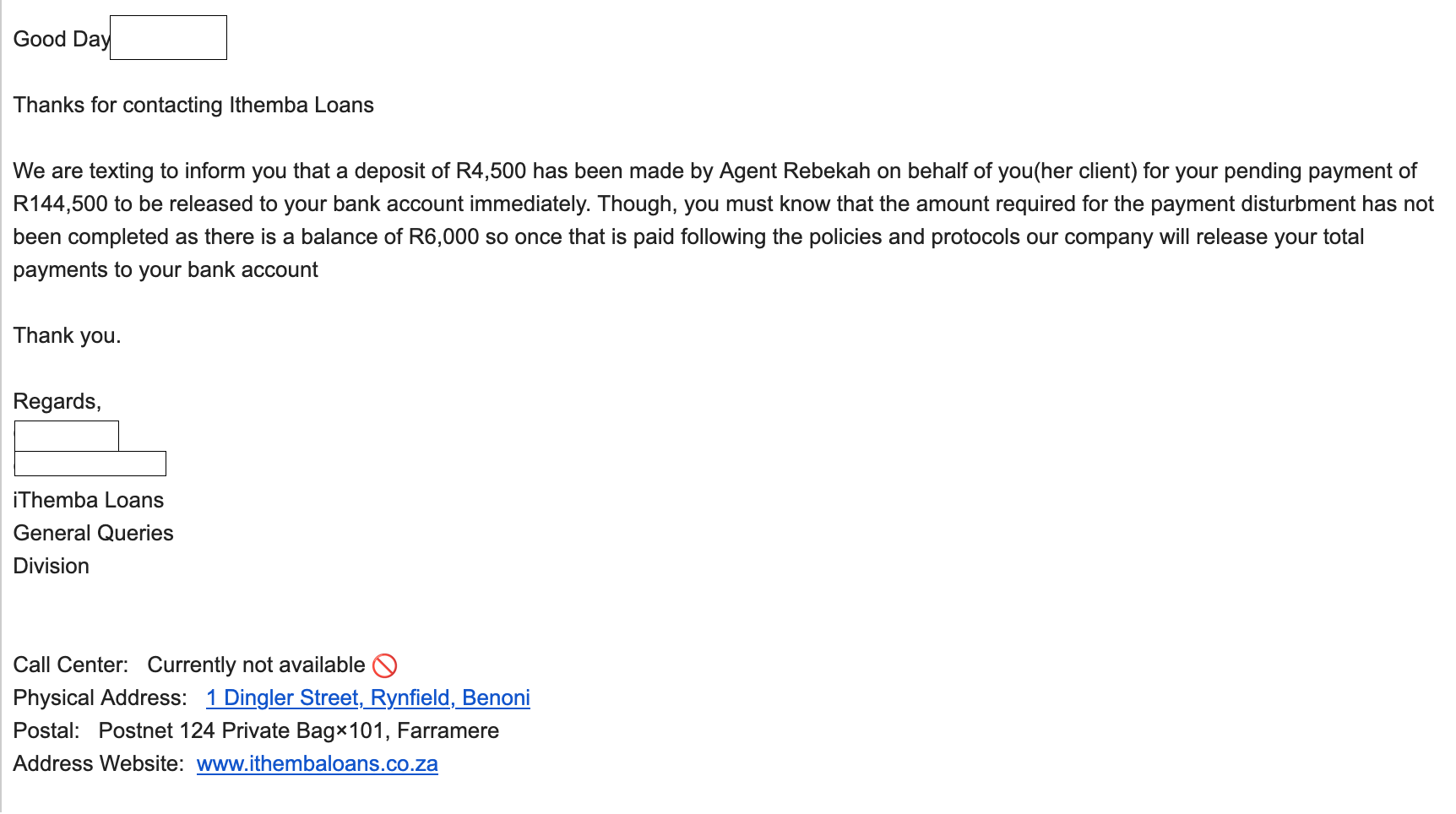
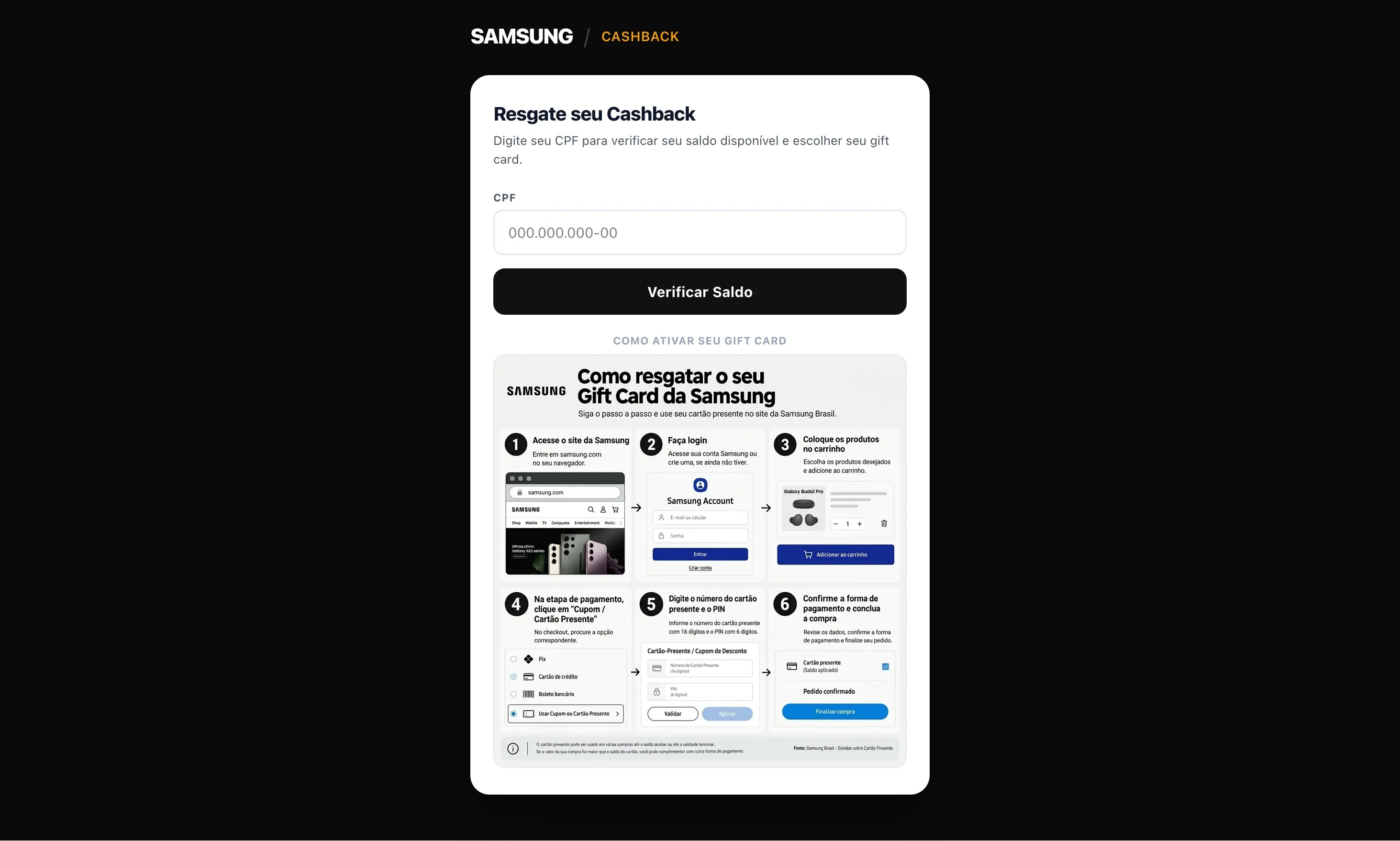
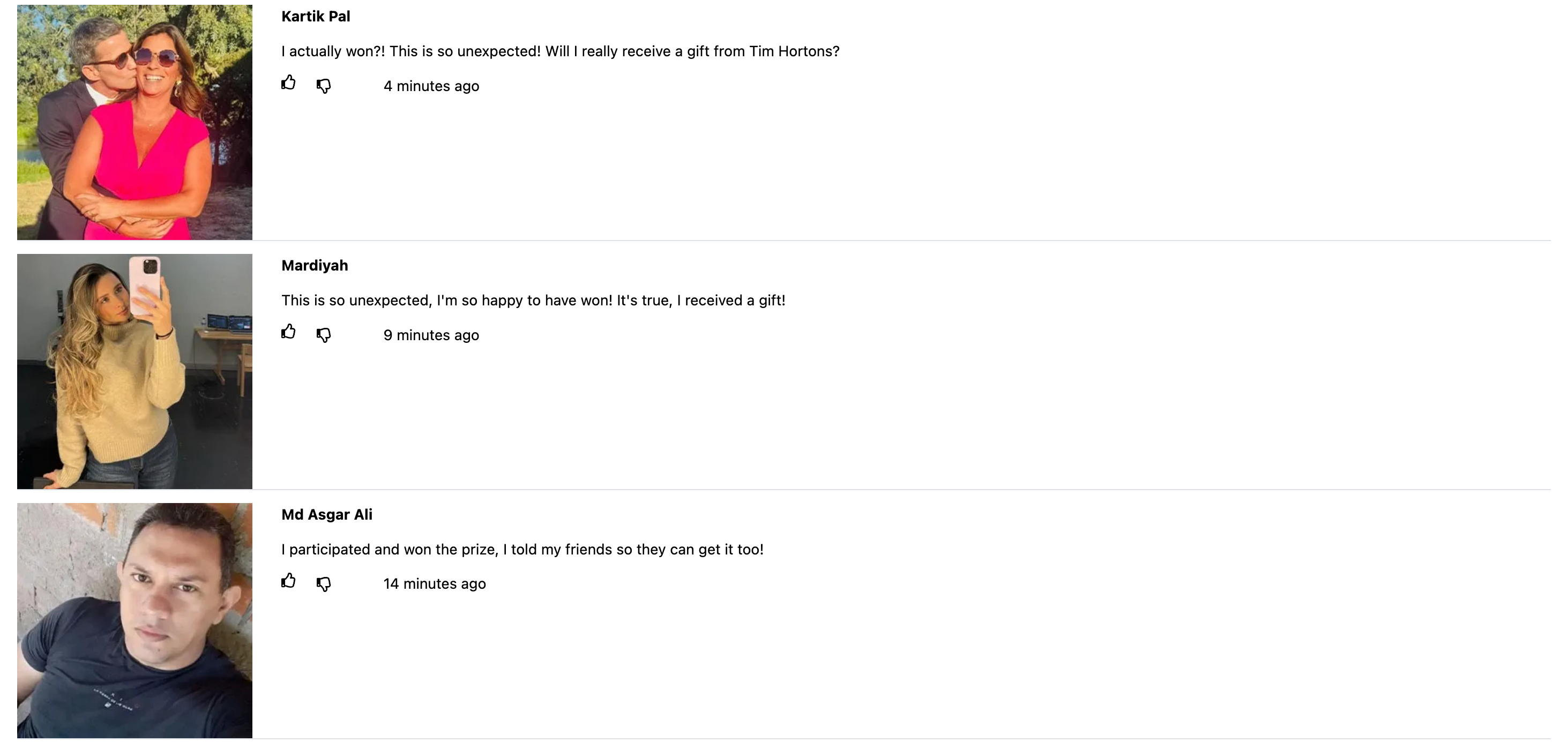
| Advance-Fee Loan Release Scam You’re told that a loan, payout, or “approved payment” is ready and will be sent to your bank “immediately” — but first you must pay a smaller fee (often called a release, processing, clearance, or compliance fee). Once you pay, the scammers either ask for more money because of “new problems,” or they disappear. No money is ever released.
| advance-fee | Email | High | No | 2025-09-17 | 0 |
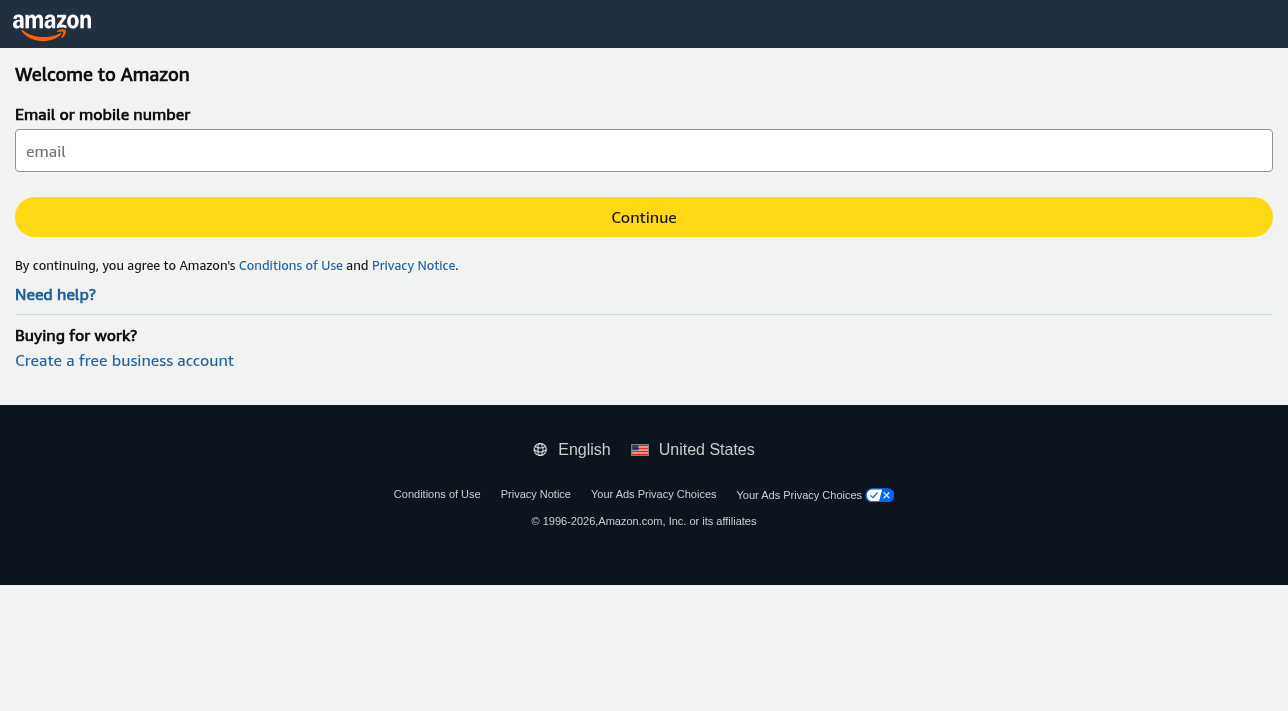
| Amazon Product Recall Smishing Scam Scammers send mass SMS messages impersonating Amazon's "Risk Management Team," claiming a recent purchase has been recalled due to "2026 safety requirements." A fake order number adds false legitimacy. The link leads victims through a fake human-verification checkpoint, then to a convincing counterfeit Amazon login page designed to steal their email address and password.
| smishing | SMS | High | No | 2026-04-01 | 0 |
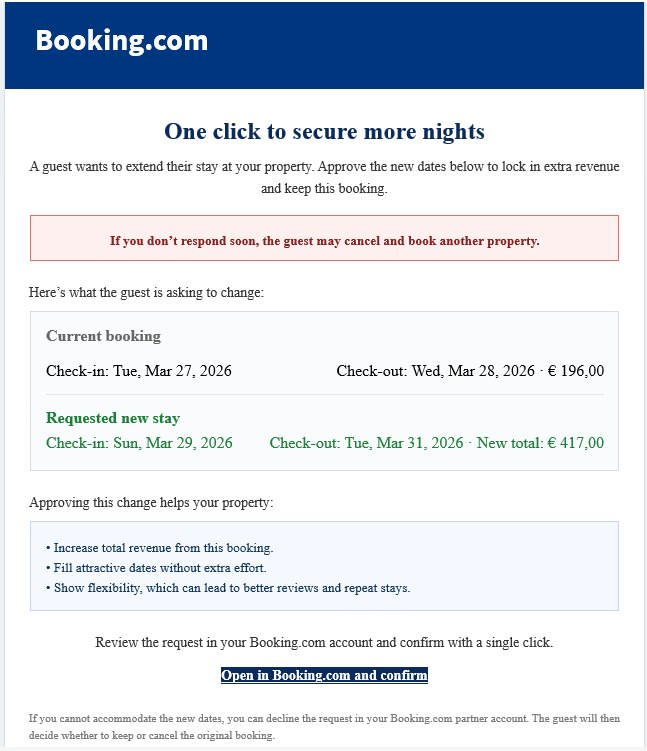
| Booking.com Host Reservation Change Scam Scammers target property owners, hosts, and managers who list on Booking.com. The message claims a guest wants to change or extend a stay and pressures the host to confirm quickly so they do not lose the booking. The link usually leads to a fake Booking.com sign-in or approval page designed to steal account credentials or take over the host account.
| phishing | Email | High | No | 2026-03-25 | 0 |
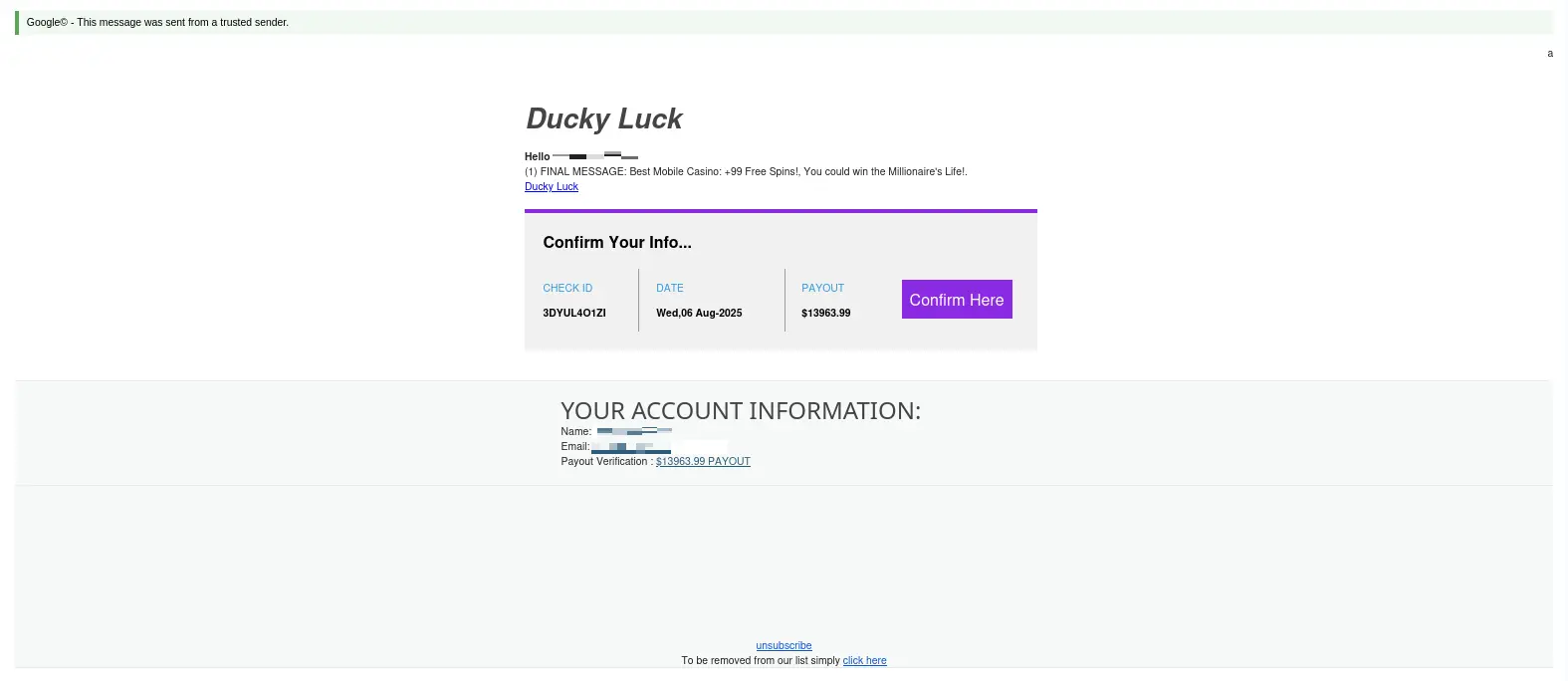
| Casino Payout Confirmation Scam Victims receive an email or message claiming that their casino winnings or payout request has been confirmed. The message uses fake verification details and official-looking logos to appear legitimate, luring the victim into clicking a link to a fraudulent casino site or handing over sensitive information. The goal is to steal money, credit card details, or encourage further gambling deposits that can never be withdrawn.
| lottery-prize | Email | Medium | No | 2025-09-20 | 0 |
| Cloud-Hosted Phishing Page Scam Scammers can use legitimate cloud-storage and file-hosting services to publish fake sign-in pages, payment forms, prize pages, delivery notices, and downloads. The cloud provider's name in a web address does not mean that the page or offer belongs to that provider or to the brand shown on the page. The real warning signs are what the page asks you to do and whether the address matches the organization you intended to visit.
| phishing | Unknown | Medium | No | 2026-09-09 | 0 |
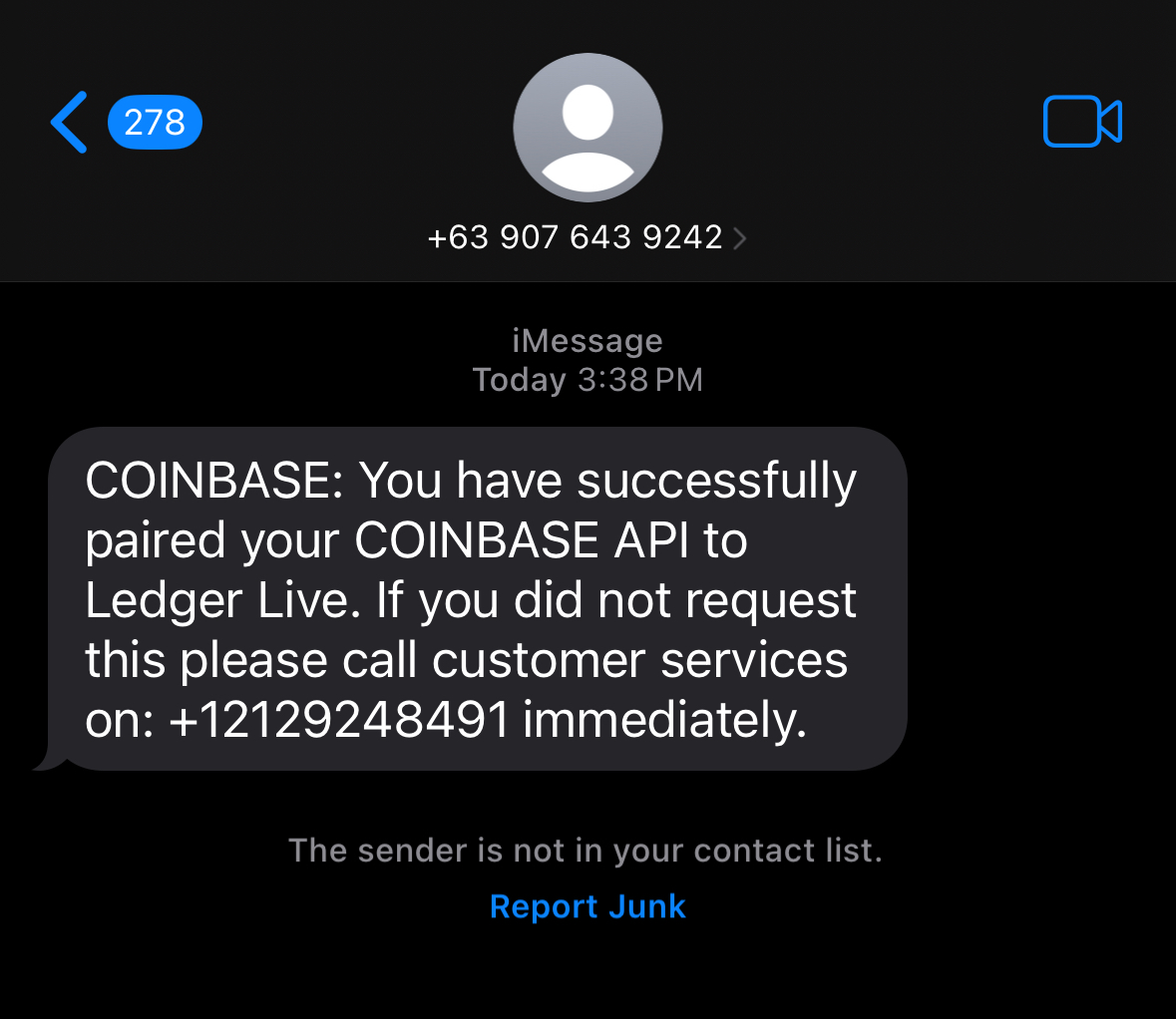
| Coinbase Pairing Scam Scammers impersonate Coinbase and send fake alerts claiming that your Coinbase account has been paired with an external service (such as Ledger Live) without your authorization. The message pressures you to call a fake support number where scammers attempt to steal your login details, 2FA codes, or crypto assets.
| phishing | SMS (iMessage) | Medium | No | 2025-09-19 | 0 |
| Cryptocurrency Giveaway Deposit-Doubling Scam Some websites use a public figure's name or image to advertise a fake cryptocurrency giveaway. They tell visitors to send coins to a wallet address first and promise to return twice as much. The promised giveaway is not a legitimate way to receive cryptocurrency: sending funds gives the visitor no reliable way to recover them.
| investment-crypto | — | High | No | — | 0 |
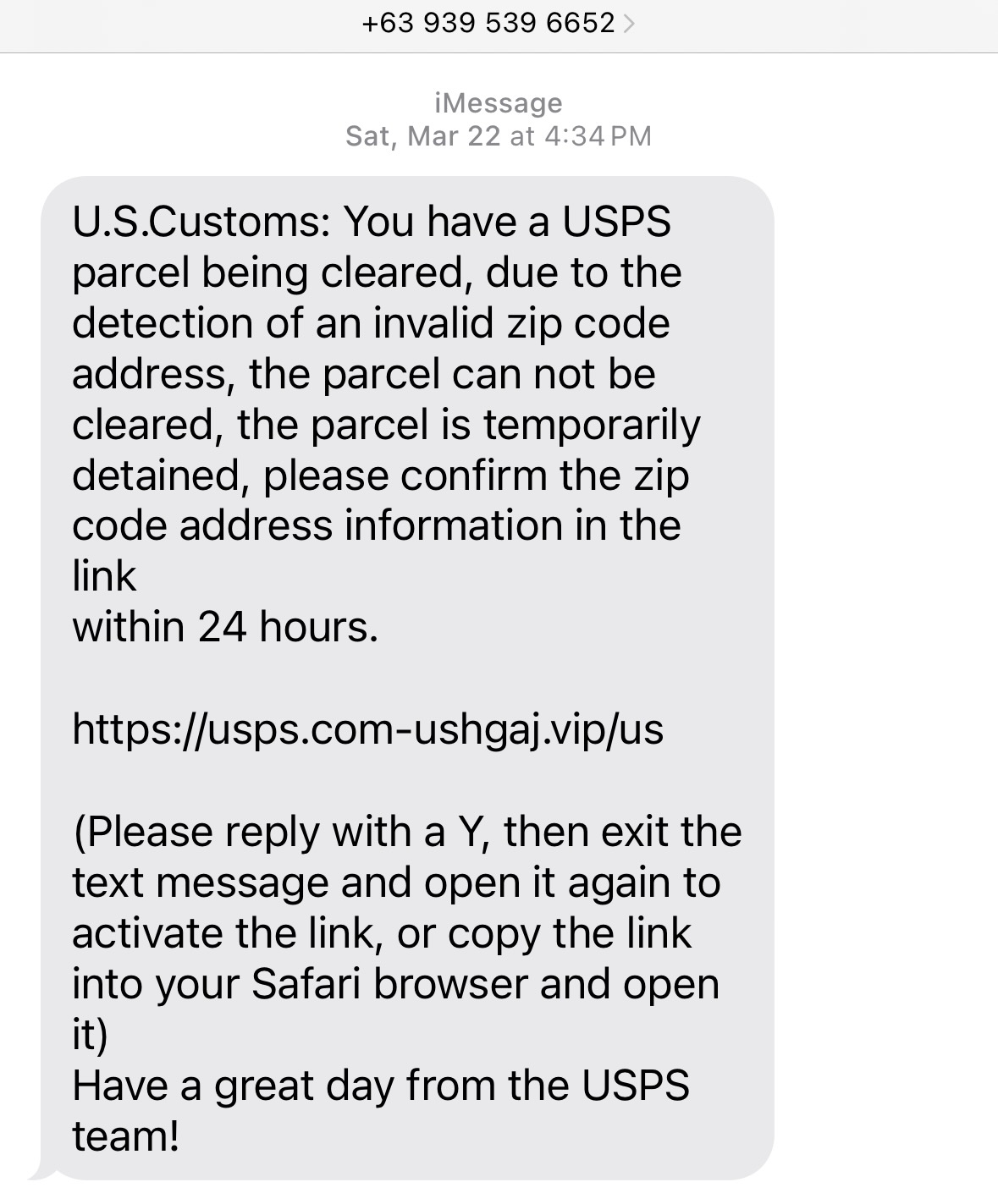
| Delivery Address Confirmation Scam Scammers send a text claiming to be from USPS or U.S. Customs saying your package can’t be delivered because of an “invalid ZIP code” or missing address. The message includes a link to “confirm” your information or asks you to reply with a single letter (like Y). The link leads to a fake website that steals your personal details and card numbers, or installs malware.
| shipping | SMS, Email, SMS (iMessage) | High | No | 2026-04-22 | 0 |
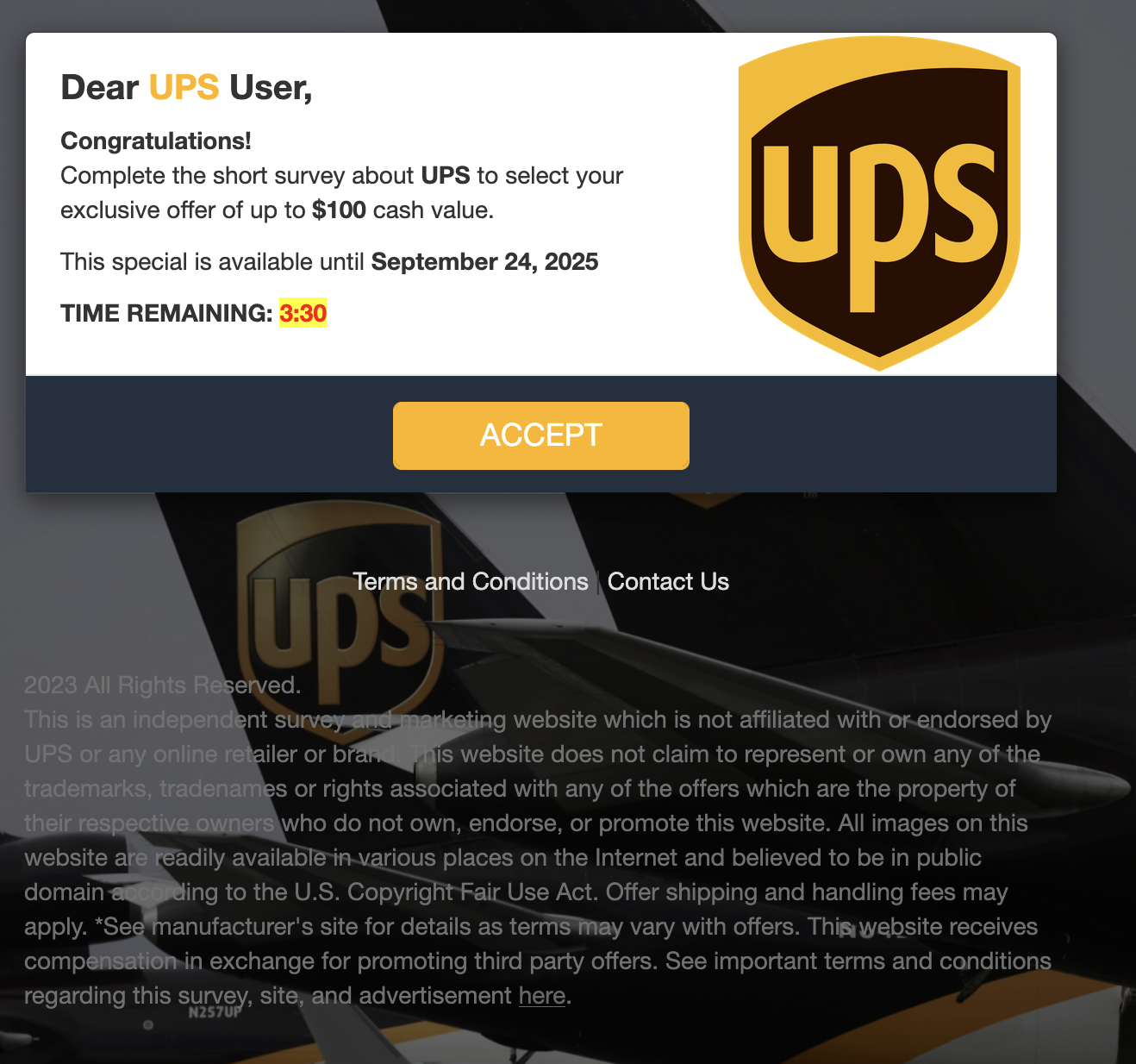
| Delivery Reward Scam Scammers pretend to be a delivery company (for example UPS, USPS, FedEx, DHL, Amazon, Royal Mail, Canada Post) and say your package is “out for delivery” or “waiting for delivery.” The link takes you to a look‑alike page that offers a cash or gift “survey reward” and shows a countdown timer to rush you. After a few easy questions, the site asks for personal details and a small payment “to claim the reward” or “cover shipping.” Victims can be charged repeatedly, signed up for unwanted subscriptions, or have their information misused.
| shipping | Unknown, Email | Medium | No | 2026-09-08 | 0 |
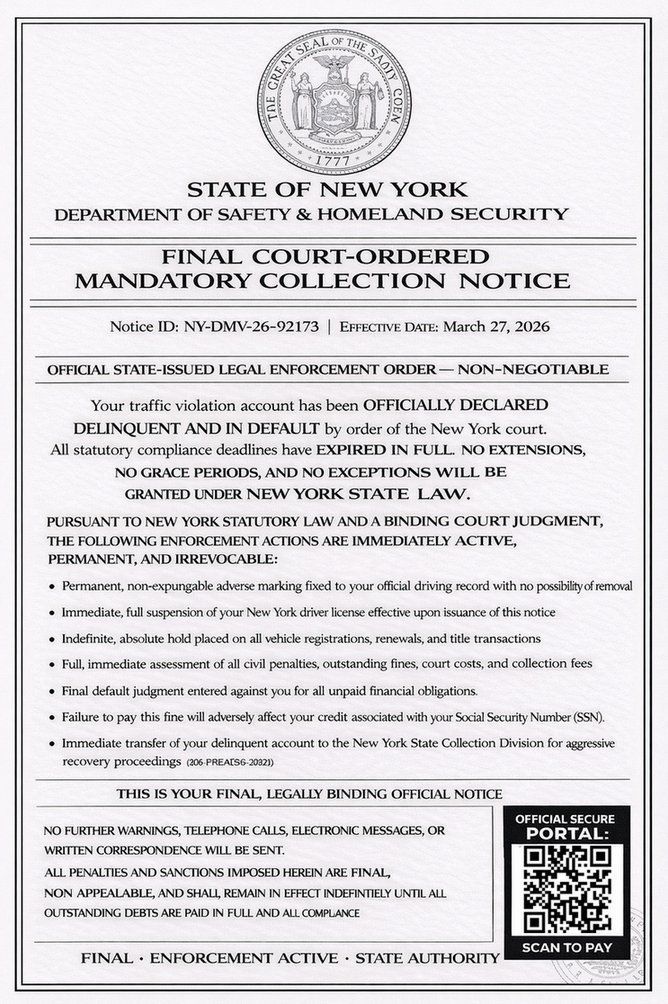
| DMV Collection Order Official Notice Scammers send out fake legal-looking DMV notices—often by text message or email—which claim you owe unpaid fines or have outstanding traffic violations. These notices threaten license suspension, court action, or damage to your credit, and include a QR code or link to a website designed to look like the official DMV, where victims are asked to enter credit card or personal information.
| phishing | Email | High | No | 2026-03-26 | 0 |
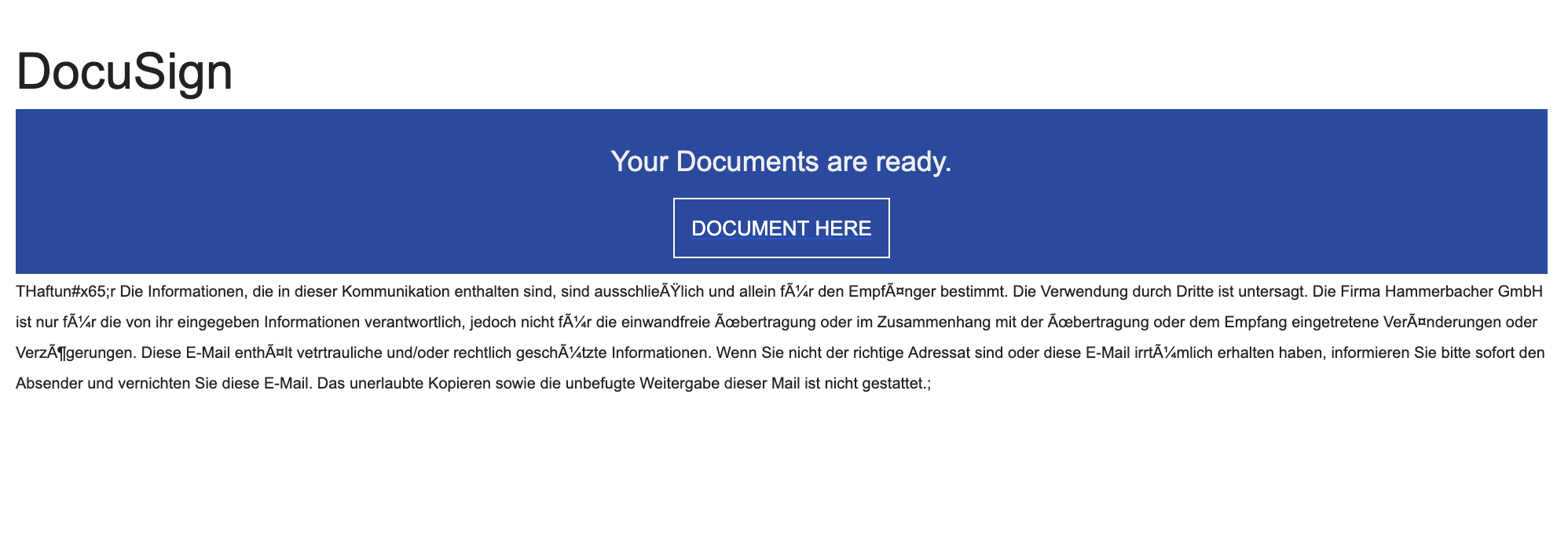
| Documents Ready To Sign Scam You receive an email that looks like it’s from DocuSign (or another e‑signature service) saying “Your documents are ready to sign.” The button or link takes you to a website that looks like a Microsoft, Google, or company login page. If you enter your email and password there, the scammers steal your login and can get into your email and other accounts.
| credential-harvest | Email | Medium | No | 2025-10-09 | 0 |
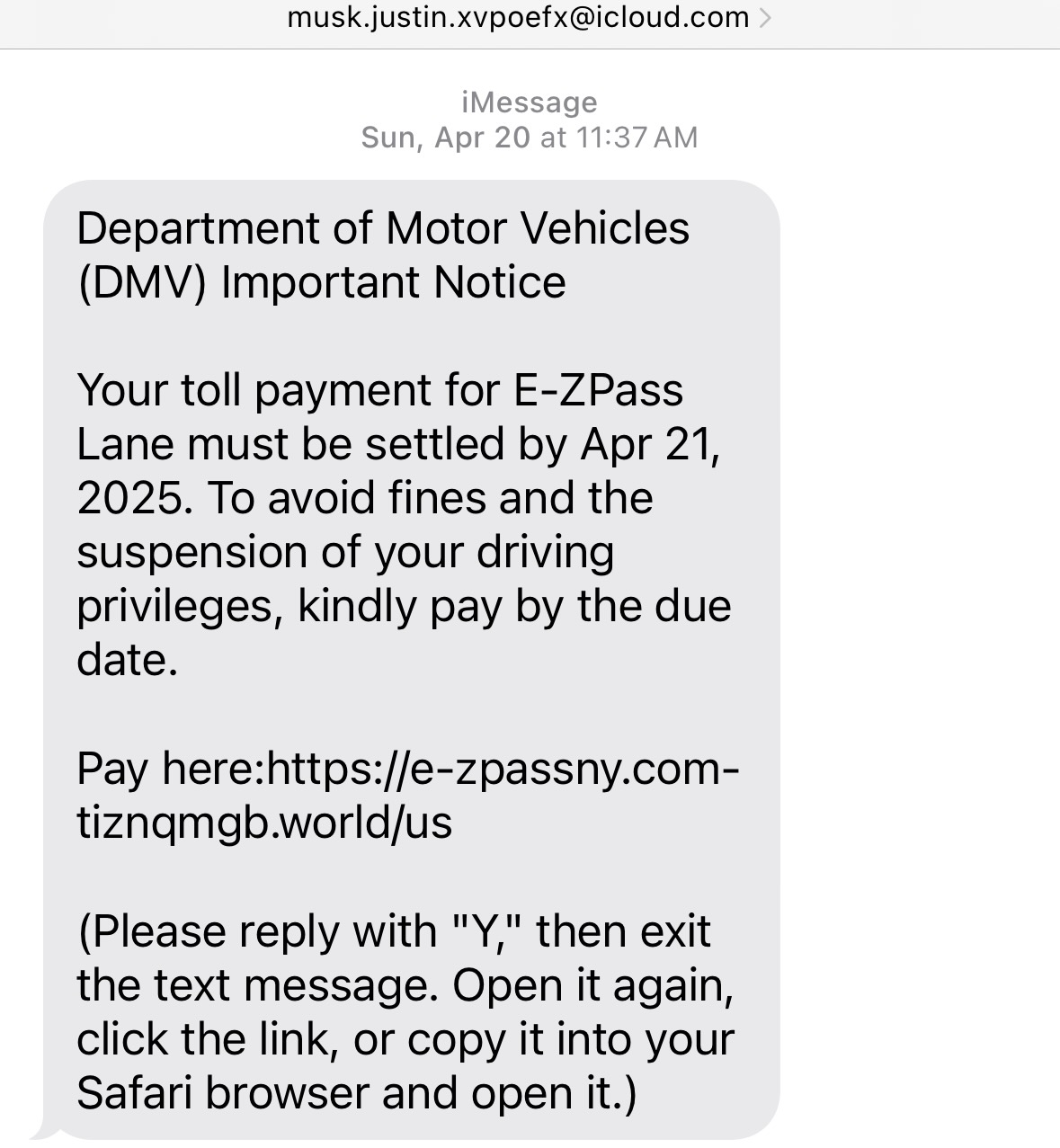
| E-ZPass/DMV Toll Text Payment Scam You get a text saying it’s from the DMV or E‑ZPass about an unpaid toll that must be paid right away. The message threatens fines or even suspension of driving privileges and gives you a link to “pay now.” The link goes to a fake site that collects your card and personal details.
| smishing | SMS (iMessage), SMS (RCS) | High | No | 2025-10-16 | 0 |
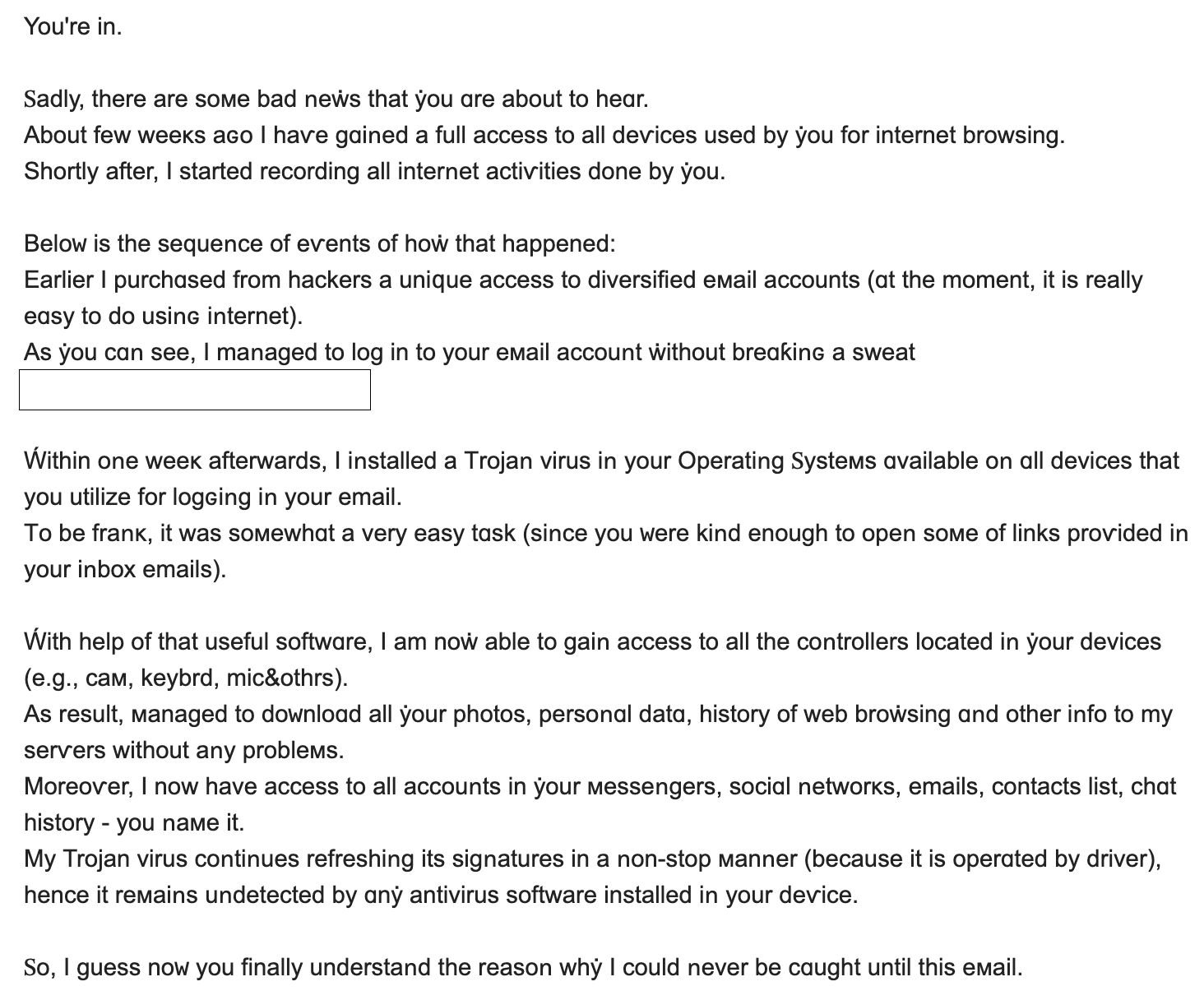
| Email Says Hacker Recorded You on Webcam (Sextortion) You receive a frightening email claiming a hacker took over your computer and recorded you through your webcam while you visited adult websites. They threaten to send the “video” to your family, friends, and coworkers unless you pay in Bitcoin within a short deadline. These are mass-produced blackmail emails. The sender usually does not have any video or access to your device—they are trying to scare you into paying. This scam is very common on Hotmail/Outlook/Live accounts, where scammers often make the message look like it came “from” your own address.
| extortion | Email | High | No | 2025-08-22 | 0 |
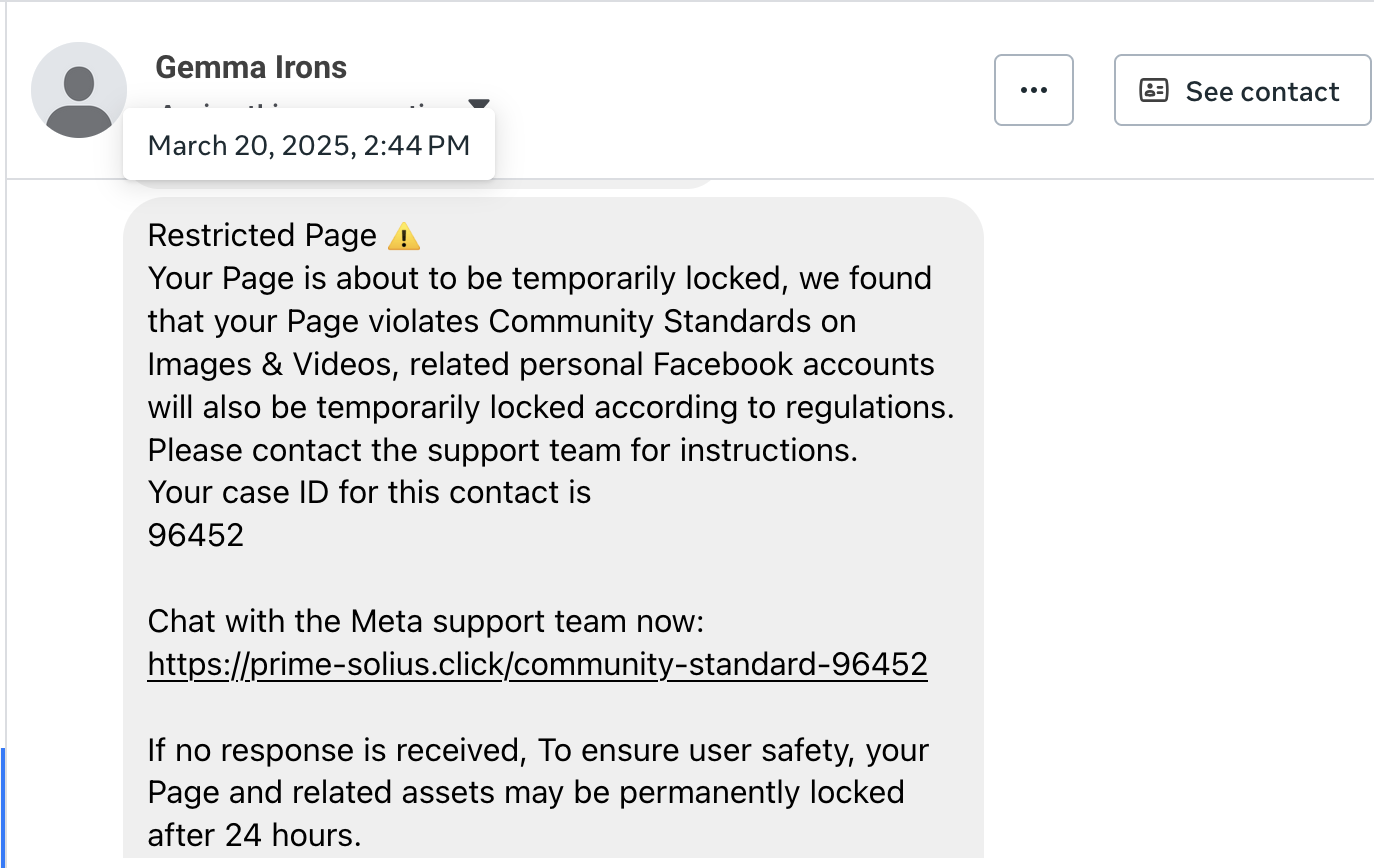
| Facebook Page Violation Scam Scammers pretend to be Meta/Facebook and claim your Facebook Page broke Community Standards. They warn your Page will be locked within 24 hours unless you “contact support” or “appeal” using a link they provide. The link goes to a fake login or “support chat” page designed to steal your Facebook password and 2FA codes. Once they get in, scammers can take over your Page, run ads on your card, or message your followers.
| phishing | Facebook Page Inbox message, Email, Facebook Messenger (Page inbox) | Medium | No | 2025-10-07 | 0 |
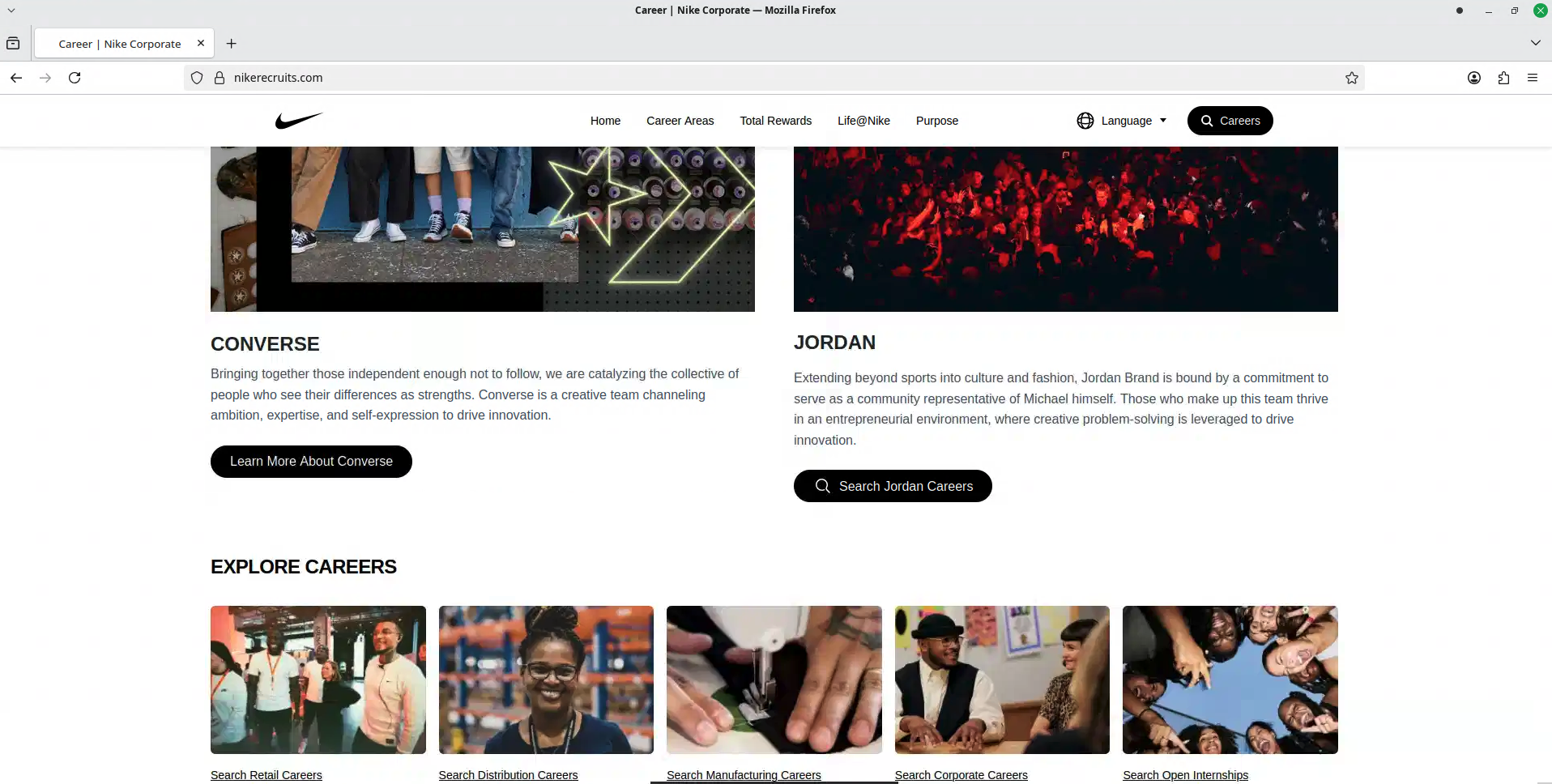
| Fake Brand Recruitment Phishing A fake recruitment website copies a well-known company’s careers page and asks job seekers to sign in through a social-media account. In this example, a page using Nike’s branding asked visitors to continue with Facebook and then displayed a screen requesting an SMS verification code.
| phishing | — | High | No | — | 0 |
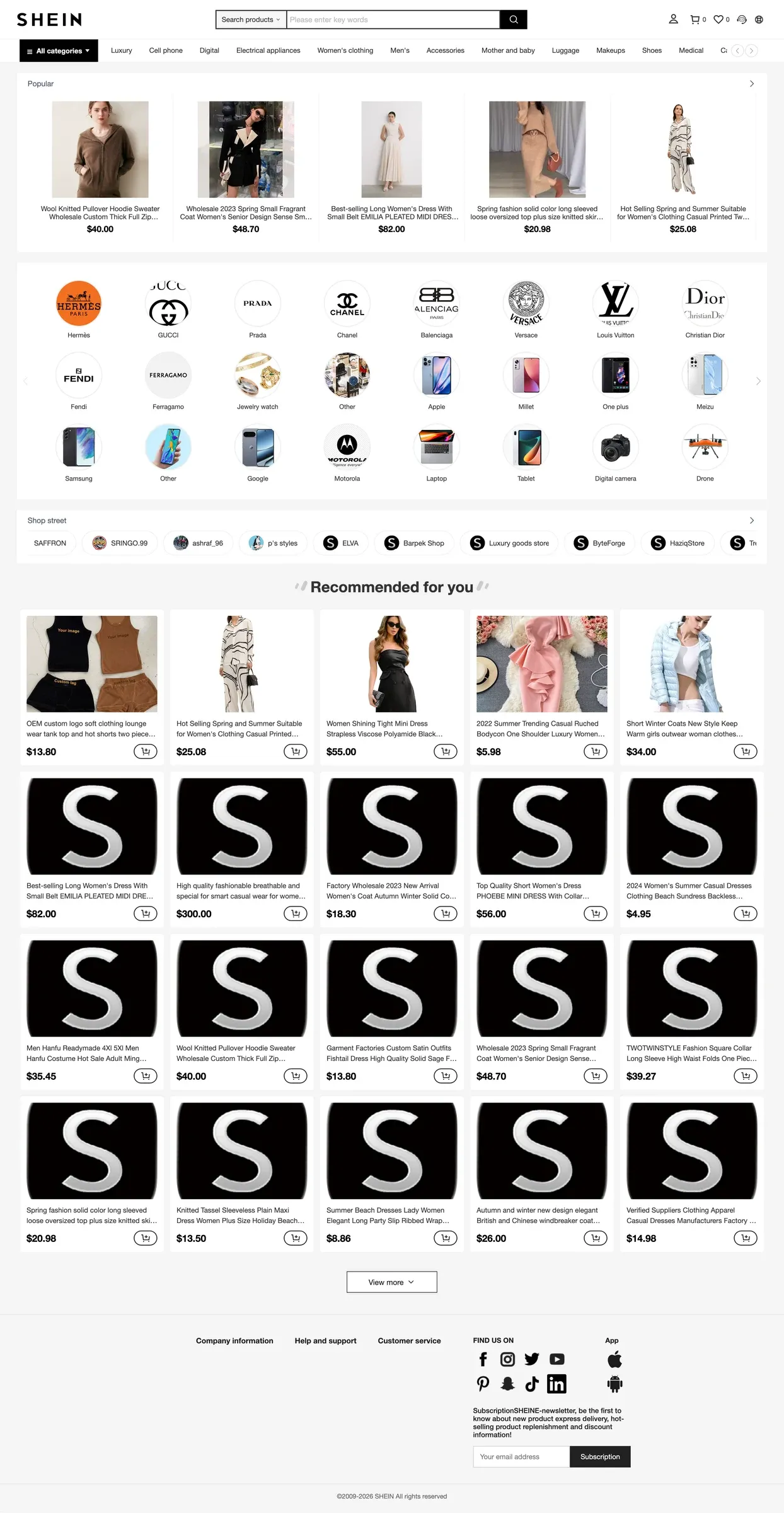
| Fake Branded Online Store Scam A shop that carries a well-known retailer's name and logo, on a web address that belongs to somebody else. It copies the wordmark, the colours and the footer closely enough to pass a glance, and often puts the brand's name into the address in a way that reads correctly at speed. The goods on sale usually do not match the real retailer. Because it is not the retailer's shop, anything given to it goes to whoever set it up.
| marketplace | Unknown | High | No | 2026-09-17 | 0 |
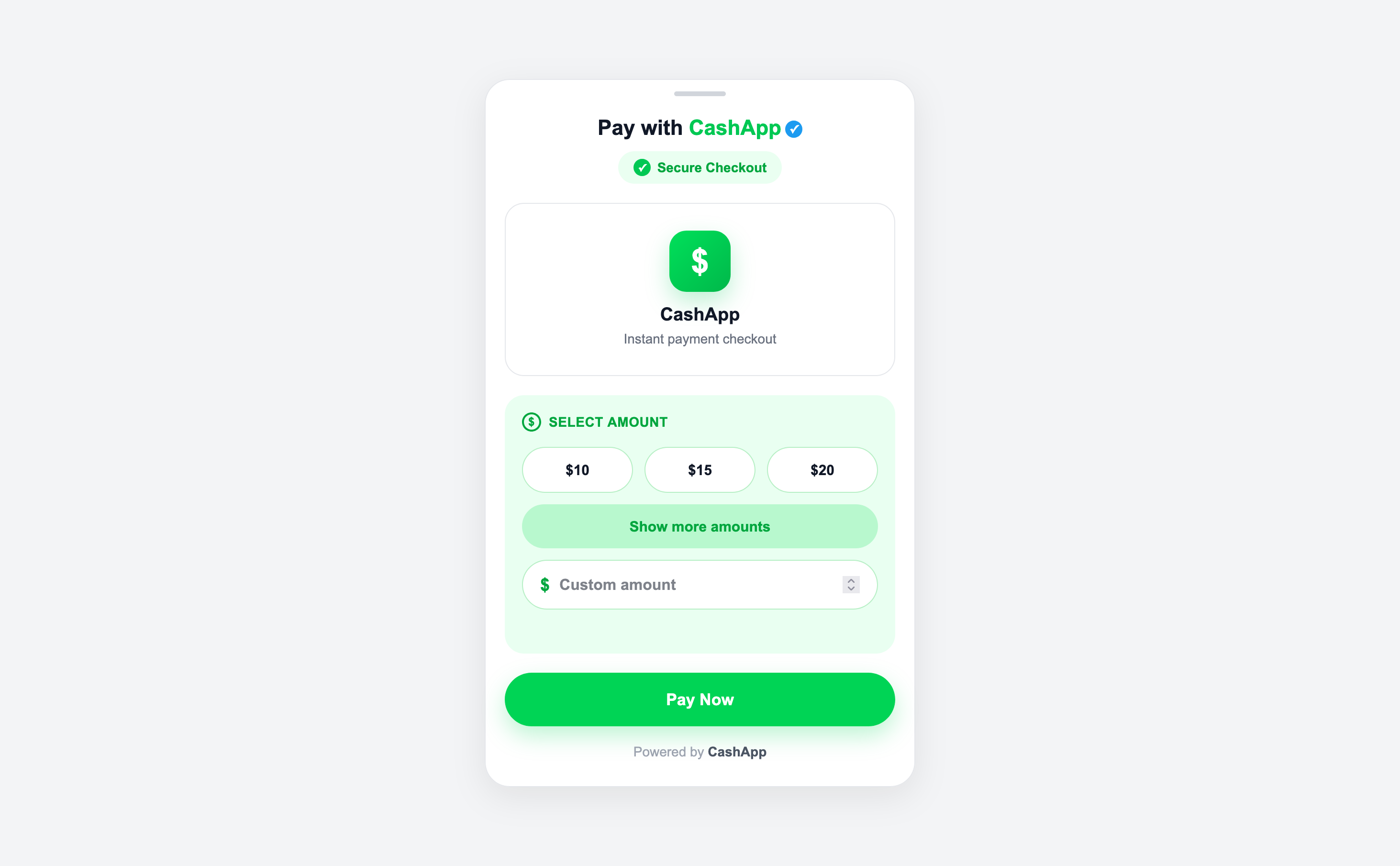
| Fake Cash App Payment Page Scam A website copies Cash App branding and presents a payment checkout outside Cash App's official domain. It offers fixed or custom dollar amounts, then creates a Bitcoin Lightning invoice and displays a QR code or payment button. The page can make an irreversible cryptocurrency payment look like a normal Cash App checkout. The Cash App name, green branding, and verification-style badge do not prove that the page is operated by Cash App or that a payment will go to a legitimate recipient.
| crypto-toolkit | — | High | No | — | 0 |
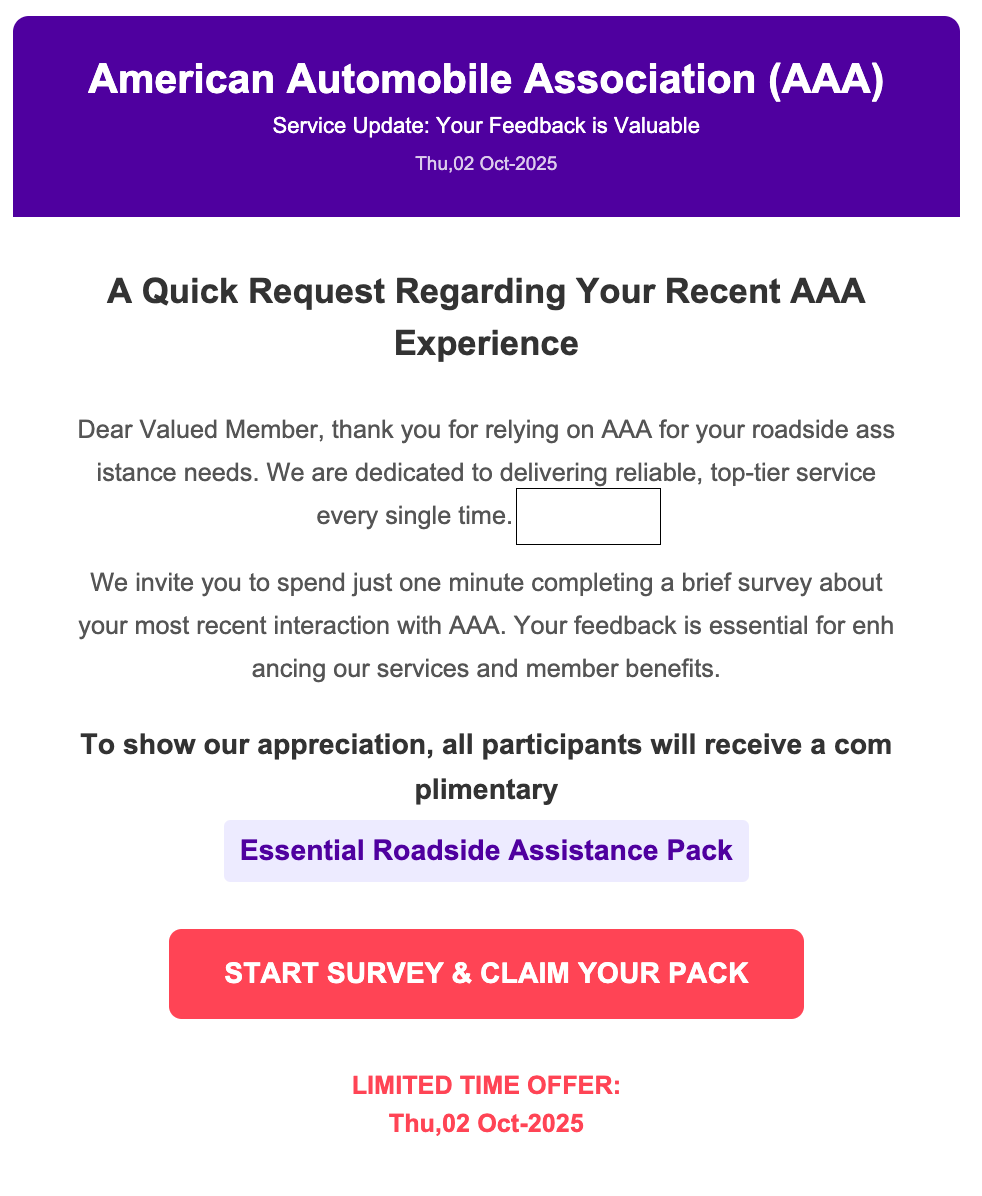
| Fake Company Survey with Free Gift Scam Scammers pretend to be well-known companies, like AAA or other membership services, and send emails inviting you to take a quick survey about your recent experience. The message often promises a free reward—such as a gift card, roadside kit, or other “thank you” item—for completing the survey. The link in the email doesn’t go to the real company. Instead, it leads to a fake site that either tries to steal your personal details, trick you into entering payment info for shipping, or installs harmful software on your device.
| phishing | Email | Medium | No | 2025-10-02 | 0 |
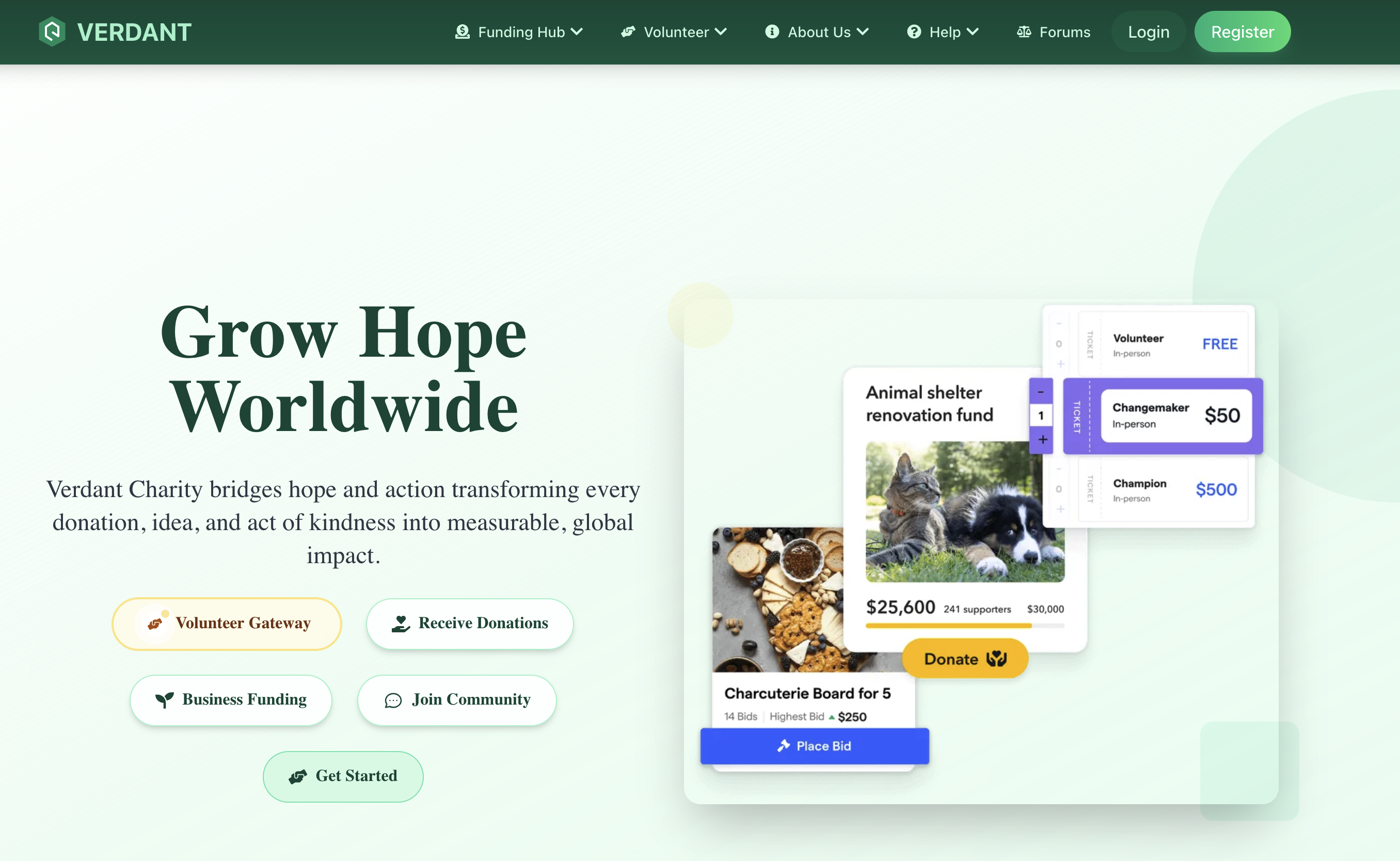
| Fake Crowdfunding Withdrawal Fee Scam Scammers set up a fundraising website that looks like a real GoFundMe-style platform. People create campaigns and start seeing “donations” appear — often large amounts that feel life-changing. When they try to withdraw, the money is locked behind extra steps such as buying “points,” “badges,” “verification,” or paying “processing fees.” The goal is to make victims pay these upfront fees again and again, while no real payout ever happens. This scam often targets people already under financial stress.
| charity | Unknown, All | High | No | 2025-10-15 | 0 |
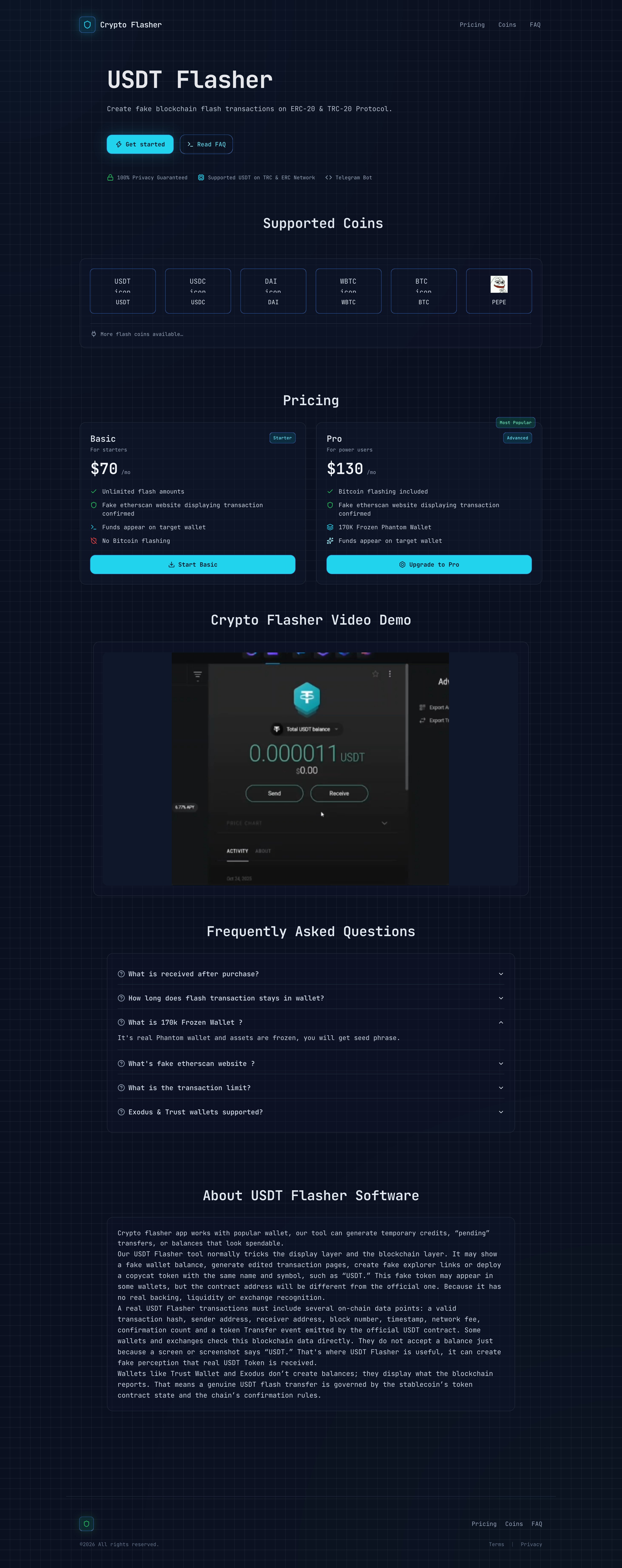
| Fake Cryptocurrency Transaction Proof Scam Some websites market tools that claim to create temporary or fake cryptocurrency transfers, fake wallet balances, or counterfeit blockchain-explorer pages. The advertised purpose is to make a recipient believe that cryptocurrency was sent or is pending when no genuine payment was confirmed on the blockchain. A person may use this false proof in a sale, loan, investment, or other payment conversation to obtain goods, money, or trust.
| crypto-toolkit | — | High | No | — | 0 |
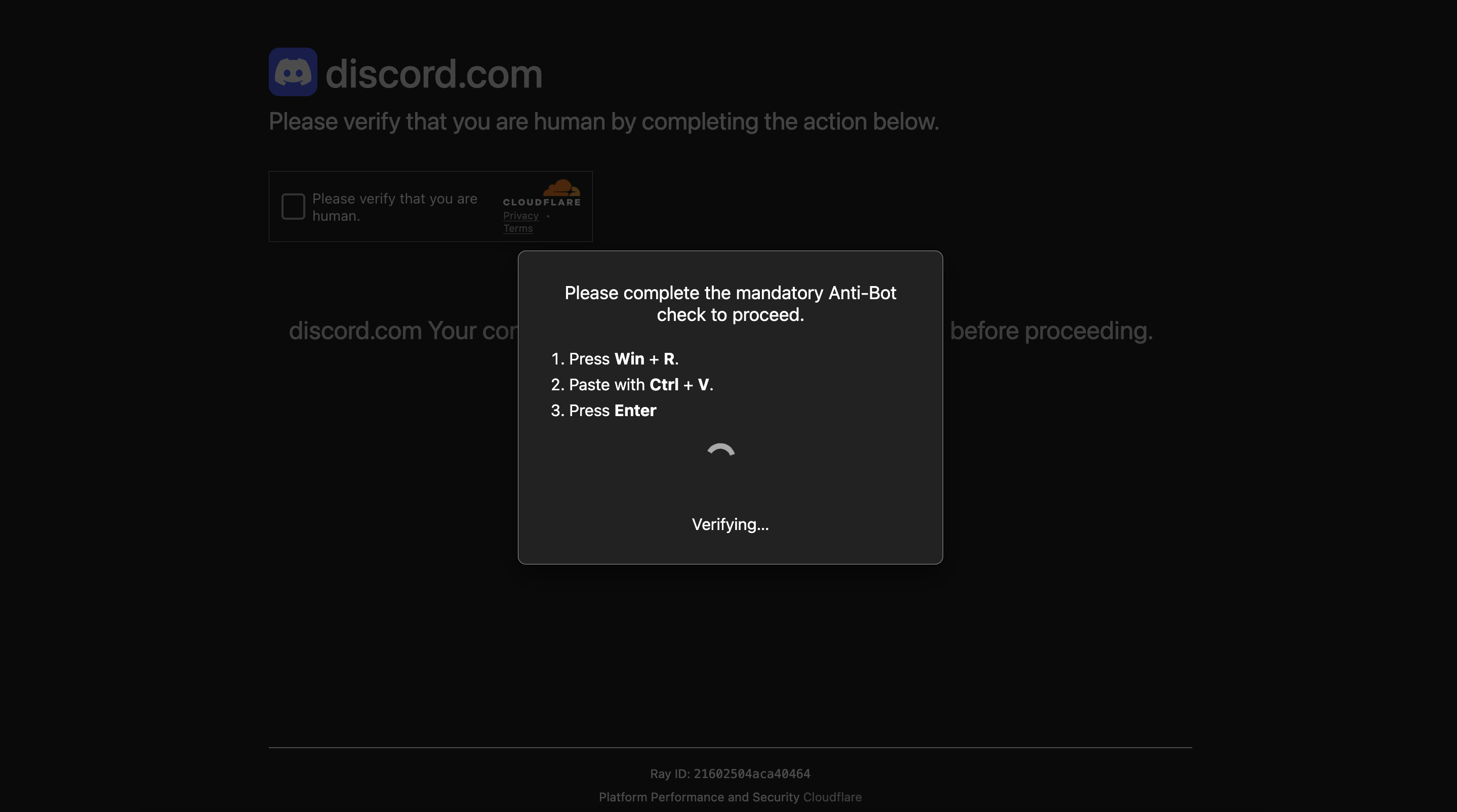
| Fake Discord Cloudflare Verification Malware Scam A page at discord-eu[.]cfd impersonates Discord and displays a fake Cloudflare human-verification prompt. Instead of using a normal checkbox, the page tells the visitor to press Win + R, paste a command with Ctrl + V, and press Enter. The supplied command uses PowerShell's encoded-command option, which can hide what will run and may download malware or execute other harmful instructions.
| malware | — | High | No | — | 0 |
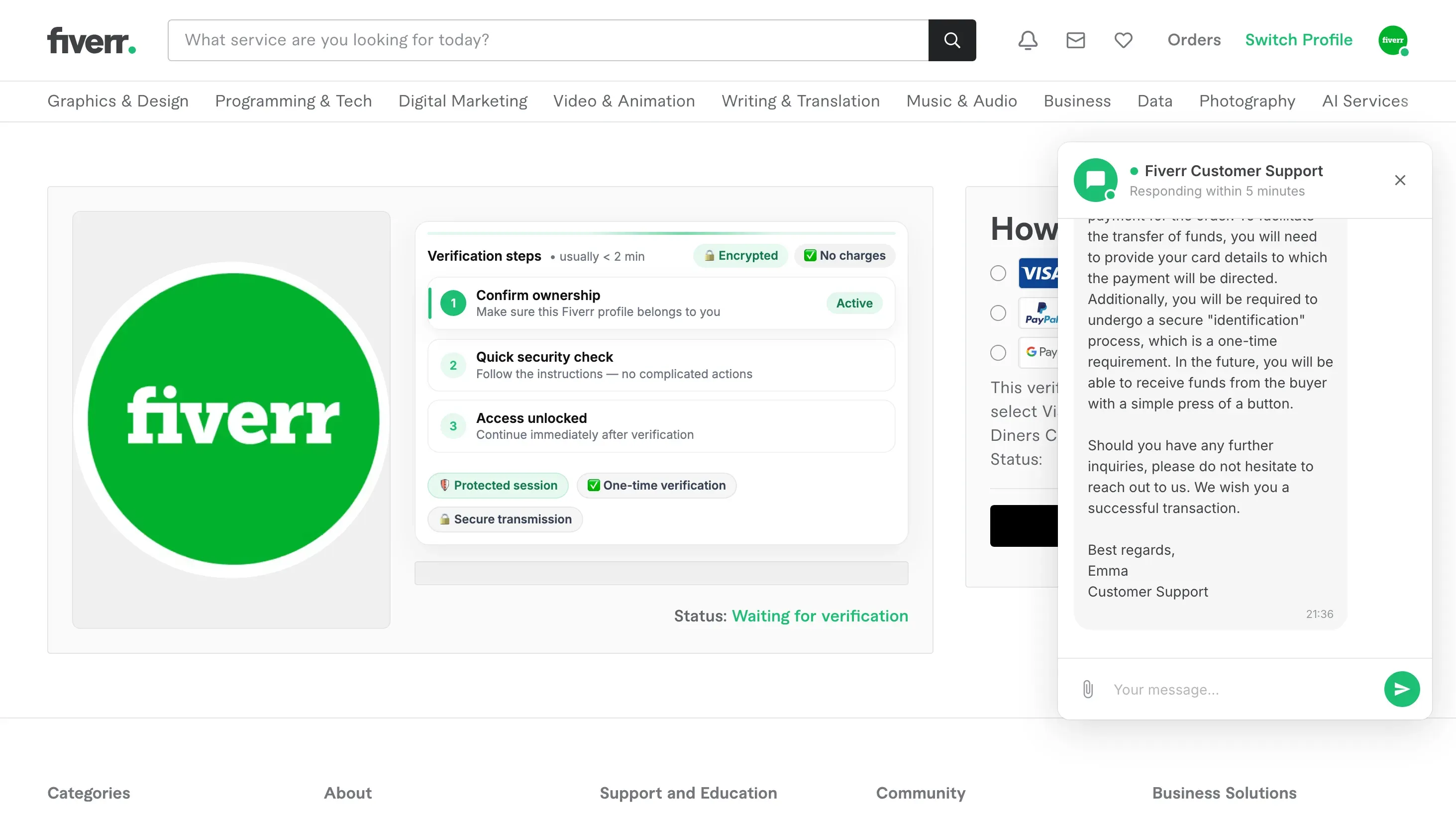
| Fake Fiverr Payout Page Asking for Card Details A copy of the Fiverr website tells a freelancer that a buyer has already paid for an order and that the money is waiting. To release it, the page says you must verify a bank card. A support chat opens by itself and repeats the request, and only a bank card is accepted. The card step happens on a second website, which asks for the card number, expiry date and security code. The page is not Fiverr, and anything typed into it does not reach Fiverr. Being paid never requires your card number or security code.
| job-scam | — | High | No | — | 0 |
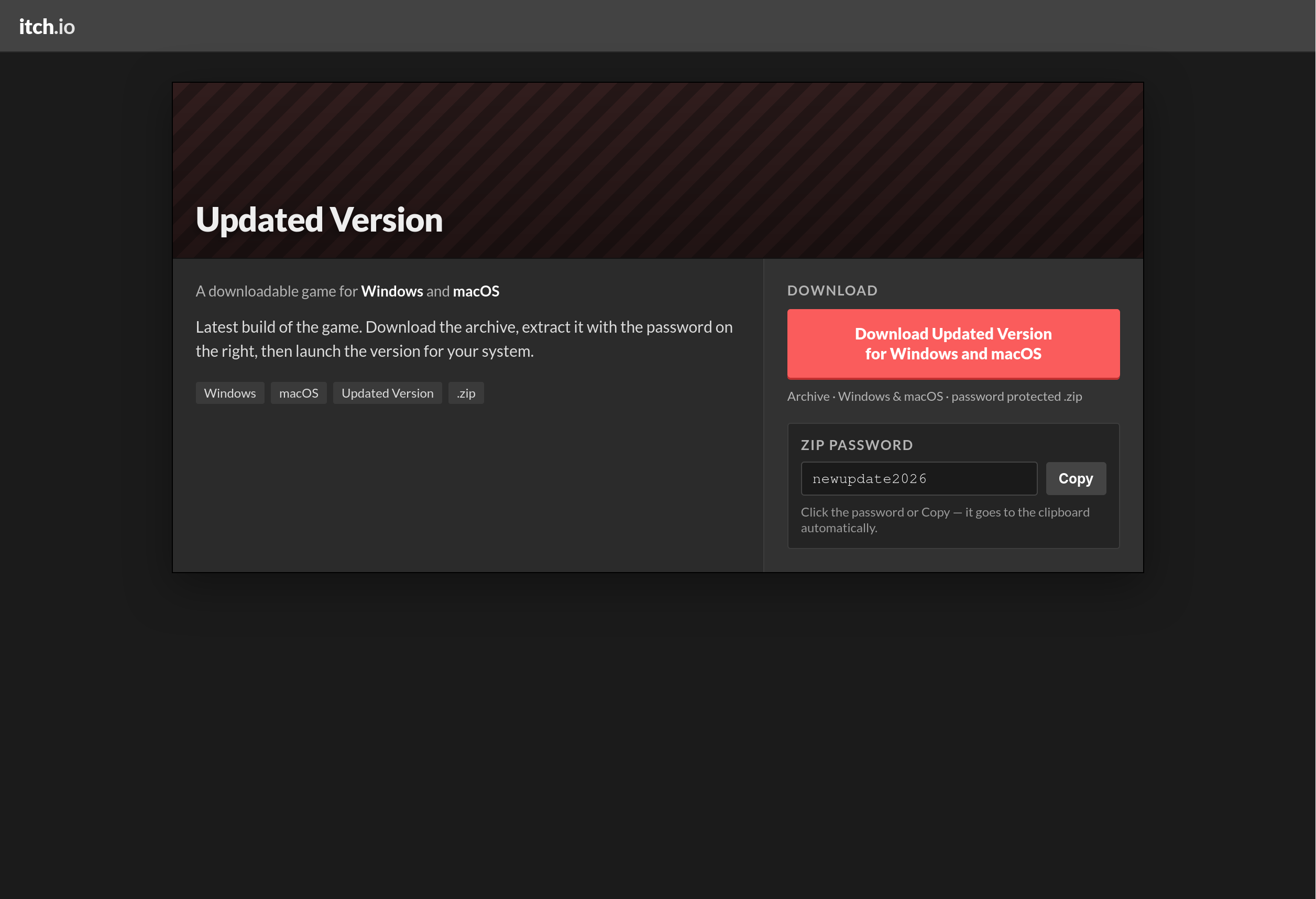
| Fake Game Download Malware Scam A fake game or playtest page copies a gaming platform's branding and offers a password-protected download. The archive is not a real game update. It can contain malware that steals passwords, browser sessions, cryptocurrency wallets, or other information from the computer.
| malware | Unknown | High | No | 2026-09-09 | 0 |
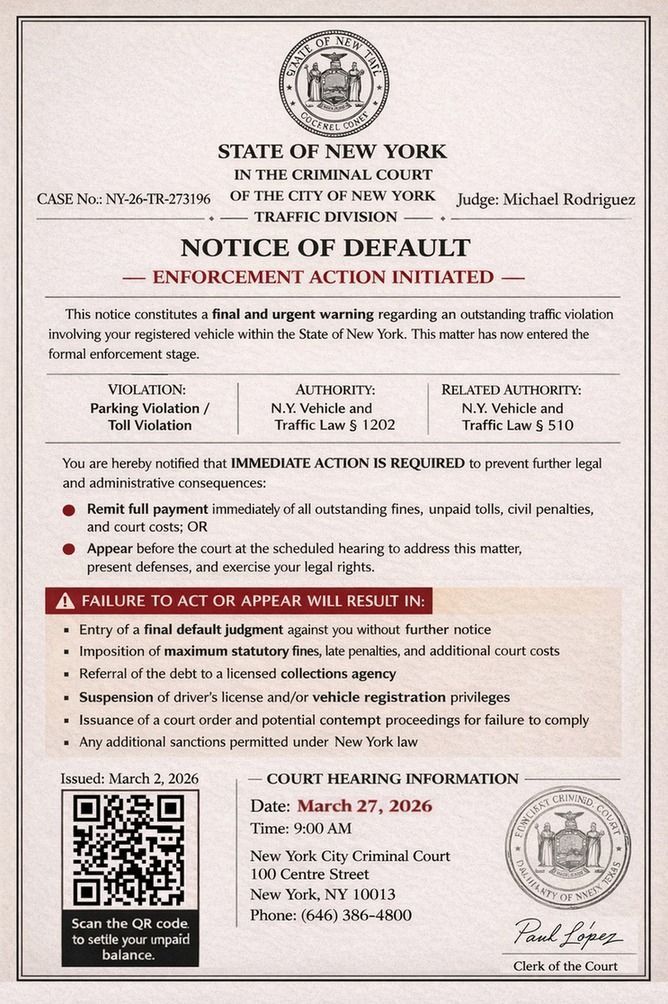
| Fake Government Violation Notice Scam Scammers send official-looking letters, emails, or texts claiming you owe money for a traffic ticket, overdue fine, or other government violation. These notices use threats like extra fees, court action, or license suspension to scare you into paying quickly—usually through a scam website or QR code. The goal is to steal your money and personal information by pretending to be a trusted government agency.
| phishing | SMS, Email | High | No | 2026-09-07 | 0 |
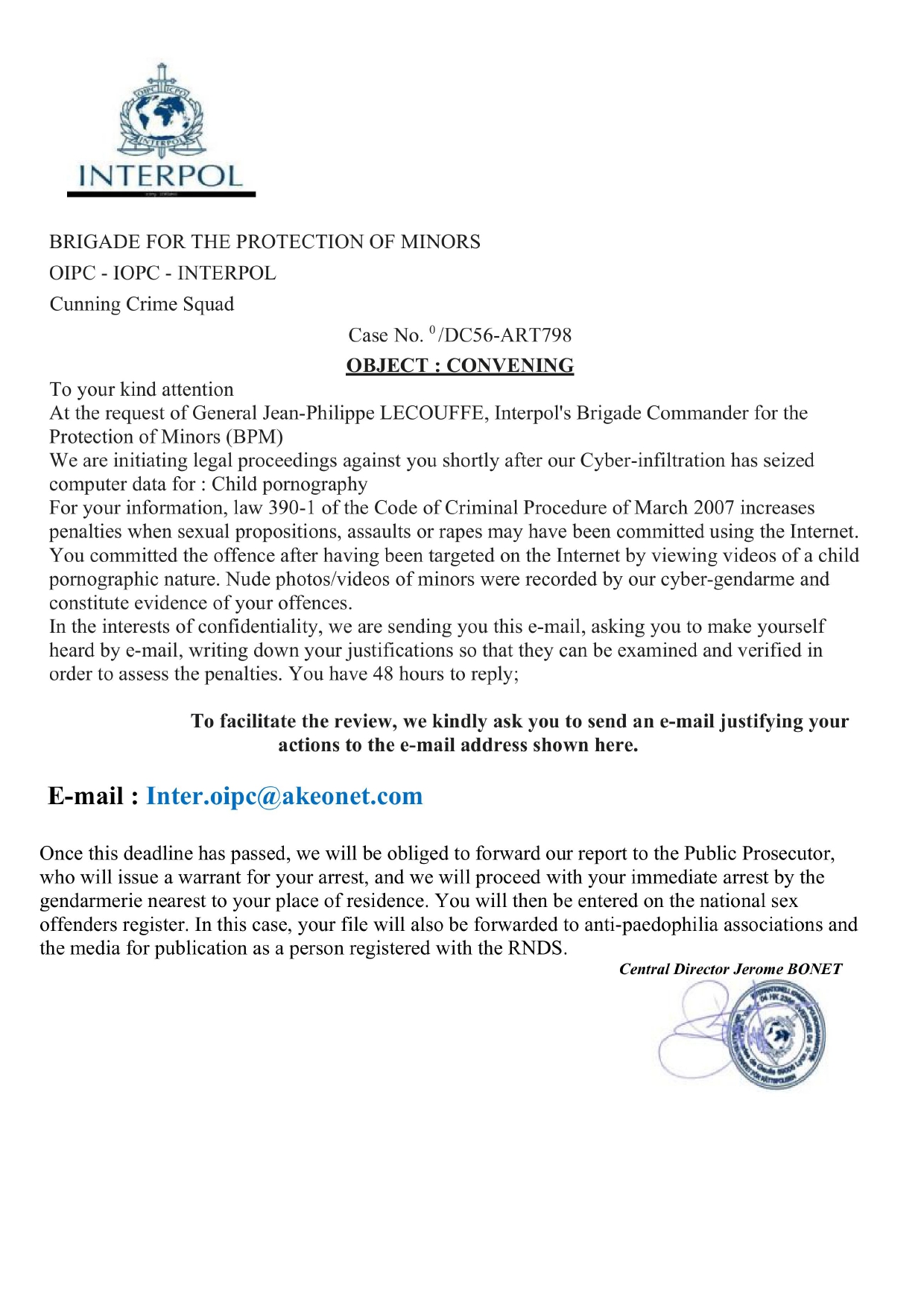
| Fake Interpol Email Extortion Scammers send emails pretending to be from Interpol or another police unit, claiming you committed an “administrative offense.” They attach a fake letter with logos and official language, threaten arrest within 48 hours, and tell you to reply to a specific email address to “justify” yourself. Once you engage, they pressure you to pay a “fine” or hand over personal details. This is meant to scare you into acting quickly.
| extortion | Email | High | No | 2025-10-14 | 0 |
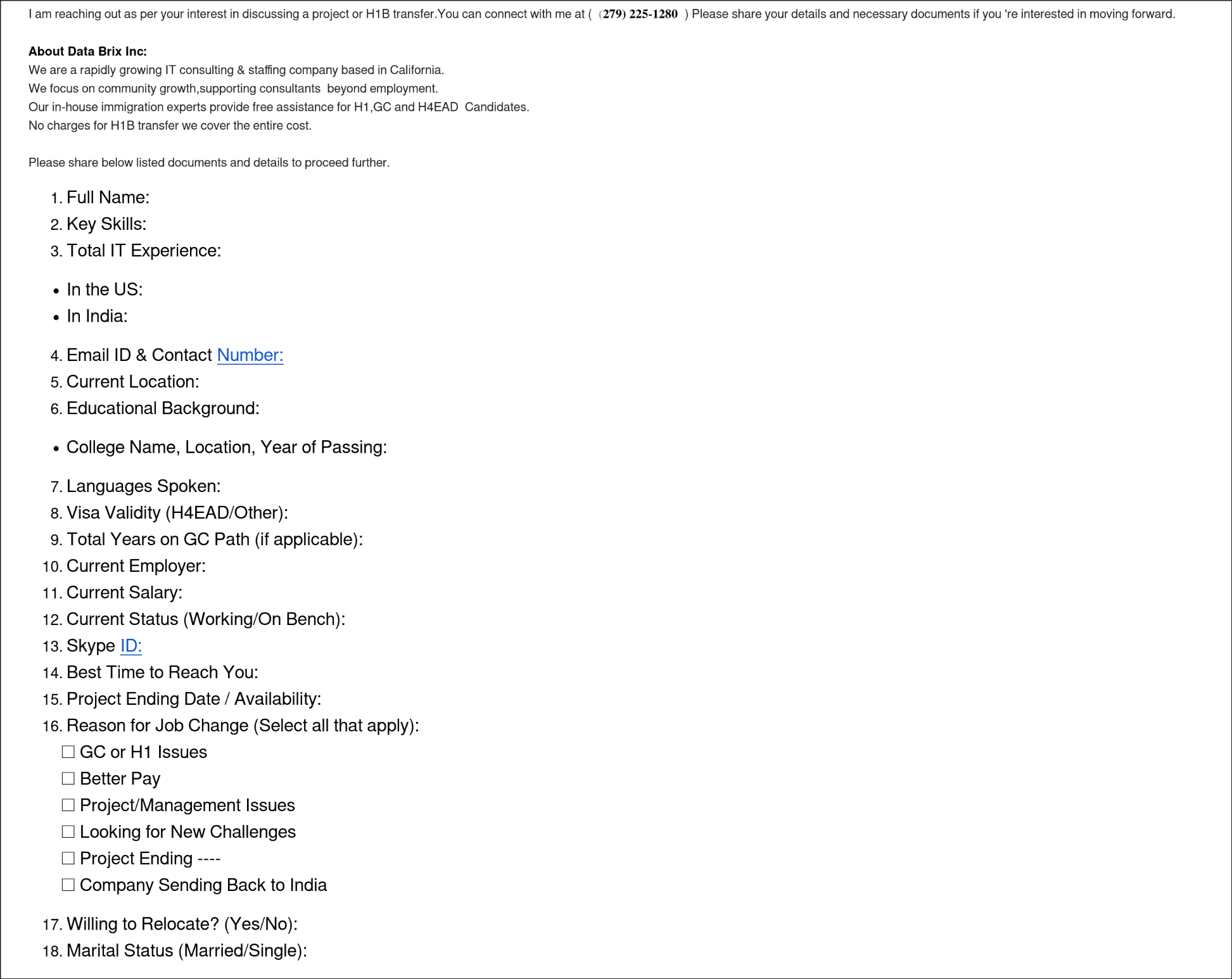
| Fake Job Offer Demanding Personal Documents Scammers pretend to be recruiters or staffing agencies offering attractive job opportunities, work visa sponsorships, or H1B transfer help. They send professional-looking emails that promise easy hiring, no fees, or exclusive project roles. Early in the conversation, victims are asked to provide a long list of sensitive documents, such as a resume, passport copy, Social Security Number, visa papers, and even driver’s license photos. These details are often used for identity theft, fraud, or to create fake profiles to scam others.
| job-scam | Email, Unknown | High | No | 2026-09-11 | 0 |
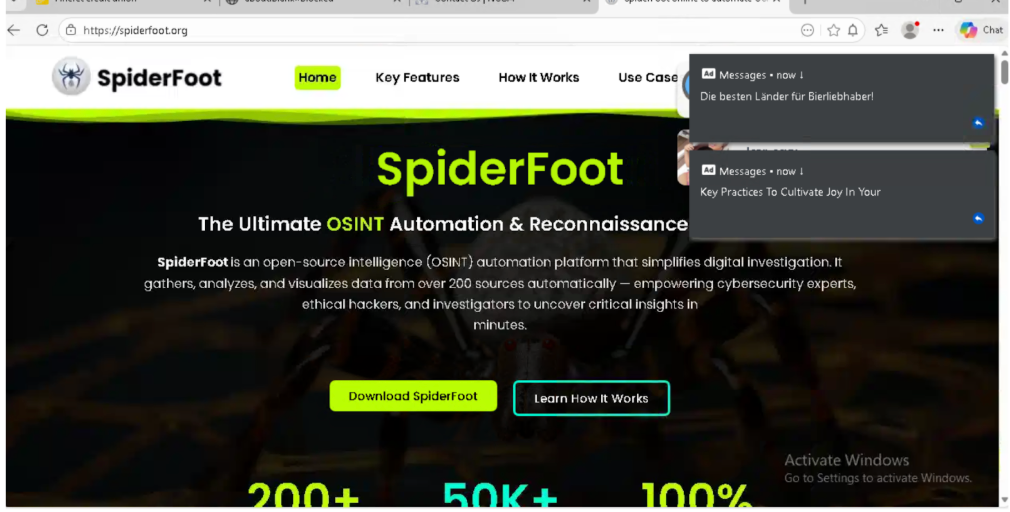
| Fake Software Download Site Scam Many people looking to download free or open-source software can accidentally land on fake websites that look almost like the real thing. These websites often appear high in Google or Bing search results, showing up when you search for a program by name. They may use the official logos, information, or even claim to be a resource for the software. However, if you try to download from these sites, you may be redirected to unrelated file-sharing platforms, bombarded with pop-up ads, or asked to log in using your Google or Facebook accounts. This puts you at risk of downloading harmful files or giving away your private account details. The real, safe downloads for software are typically provided only on the official project websites, especially for open-source projects, where the standard is to use recognized platforms like GitHub.
| impersonation | Unknown, Web Search (Google) | High | No | 2026-09-19 | 0 |
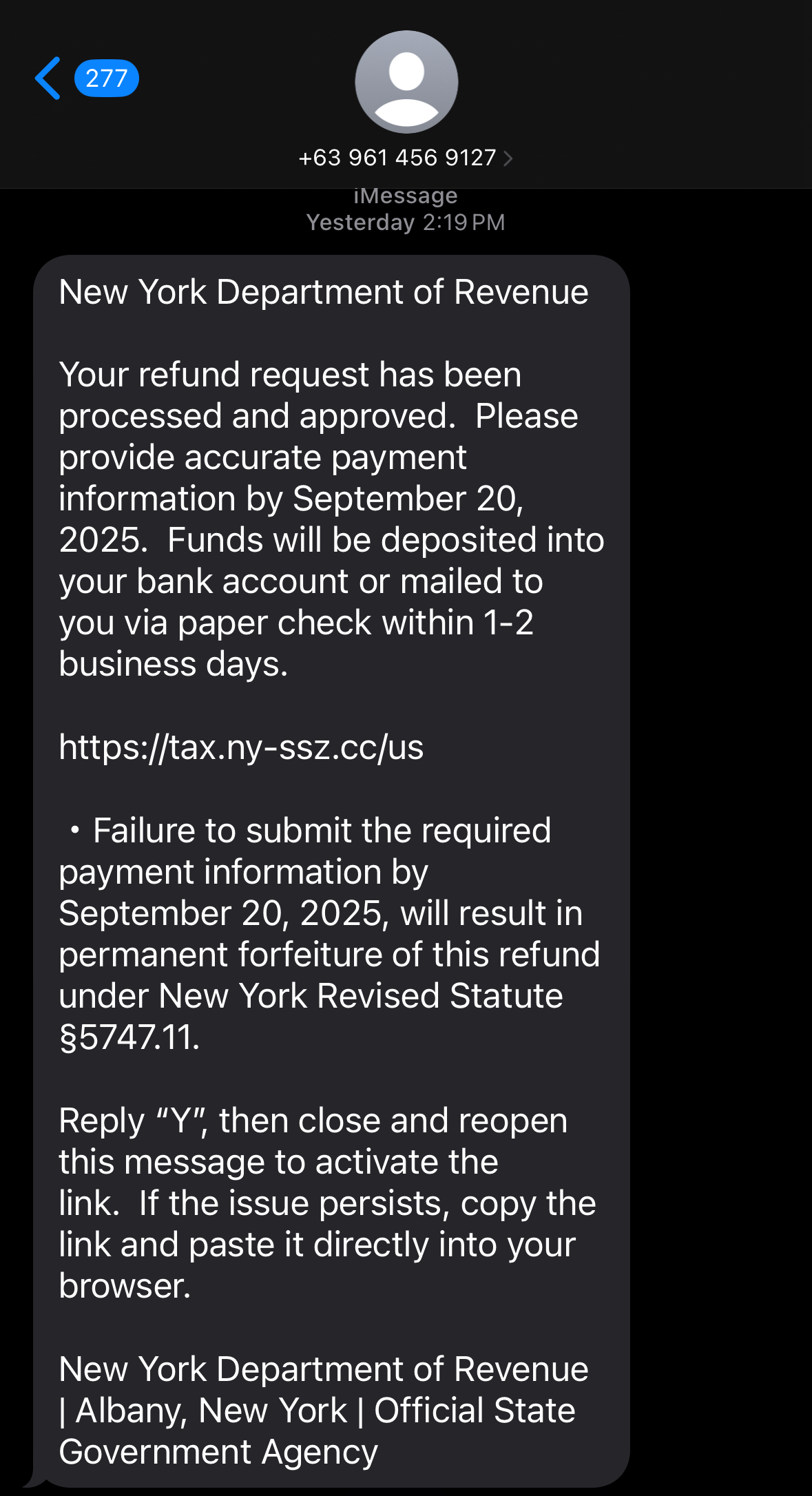
| Fake Tax Refund / Government Rebate Scam Scammers impersonate government tax or revenue departments and promise a refund or rebate. Victims are directed to click on a phishing link or provide personal/banking details, which are then stolen.
| refund-invoice | SMS (iMessage) | High | No | 2025-09-18 | 0 |
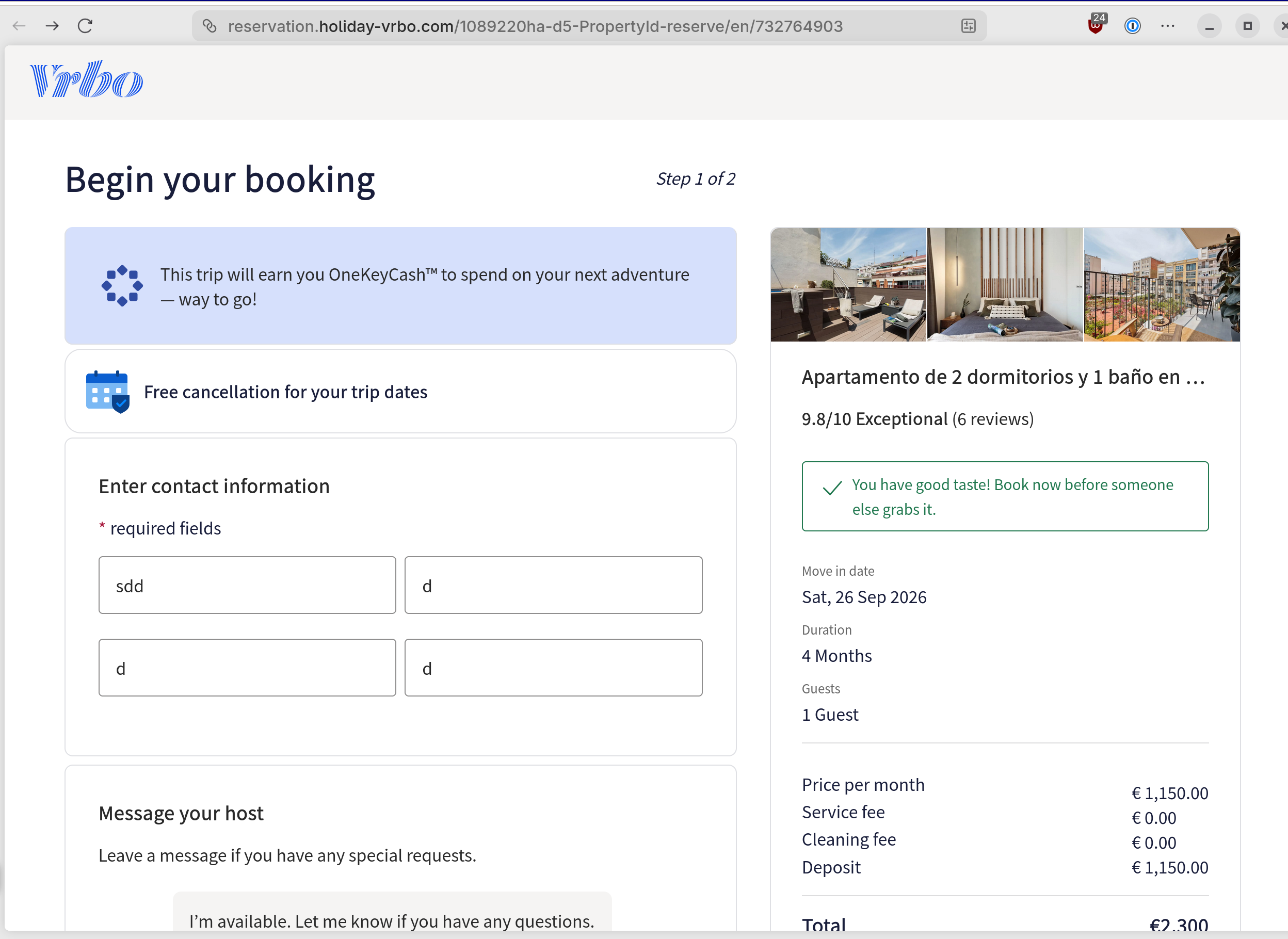
| Fake Vacation Rental Booking Site Scam A fake vacation-rental website copies a real booking company's branding and listing design. It sends travelers to an unfamiliar address, shows an attractive property, and asks them to enter contact or payment information or pay a deposit.
| marketplace | — | High | No | — | 0 |
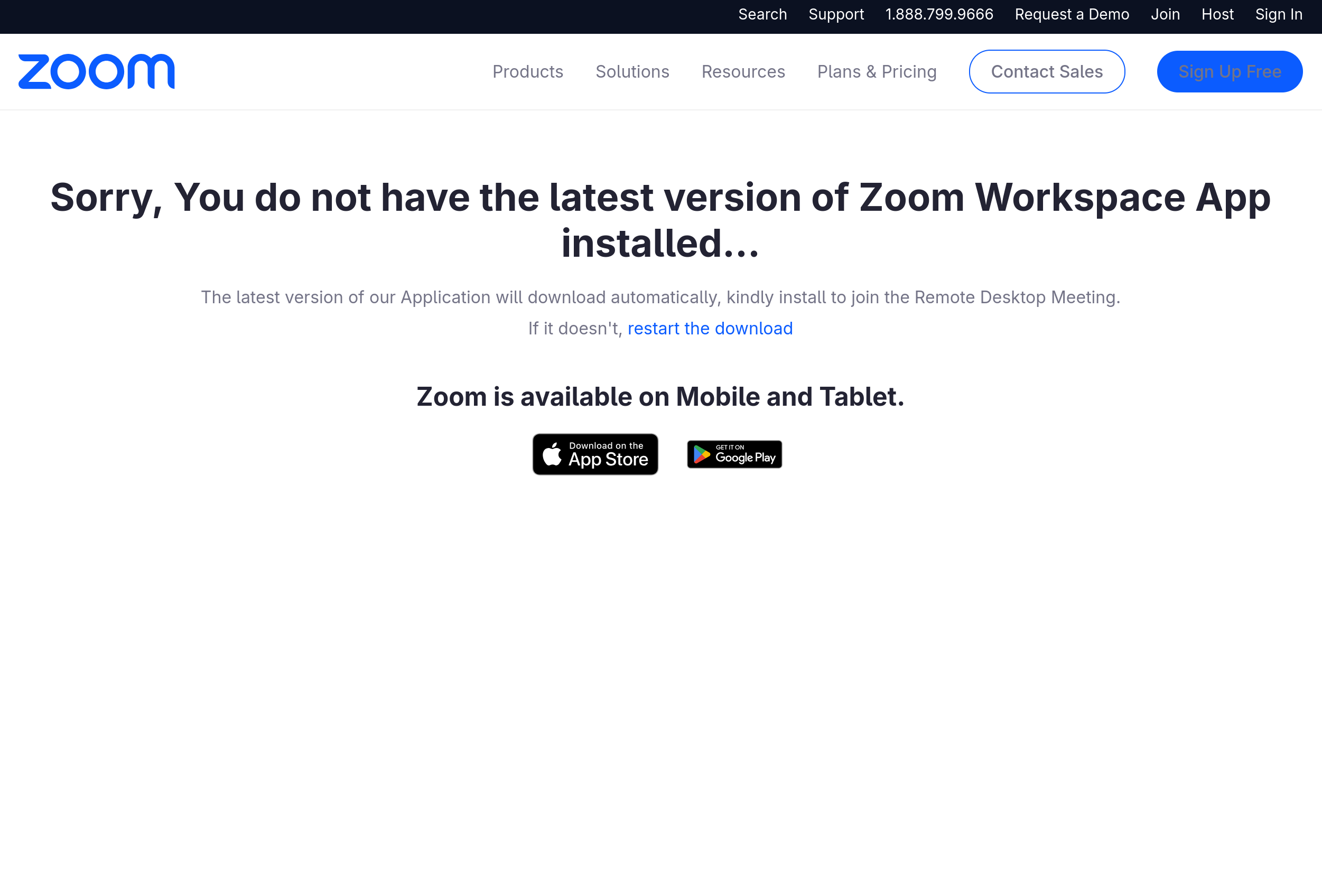
| Fake Zoom Meeting Update Malware Scam A fake Zoom meeting page copies Zoom branding and tells visitors that they need a newer version of the Zoom app before joining. It then downloads a file flagged as malware instead of a legitimate Zoom update.
| malware | — | High | No | — | 0 |
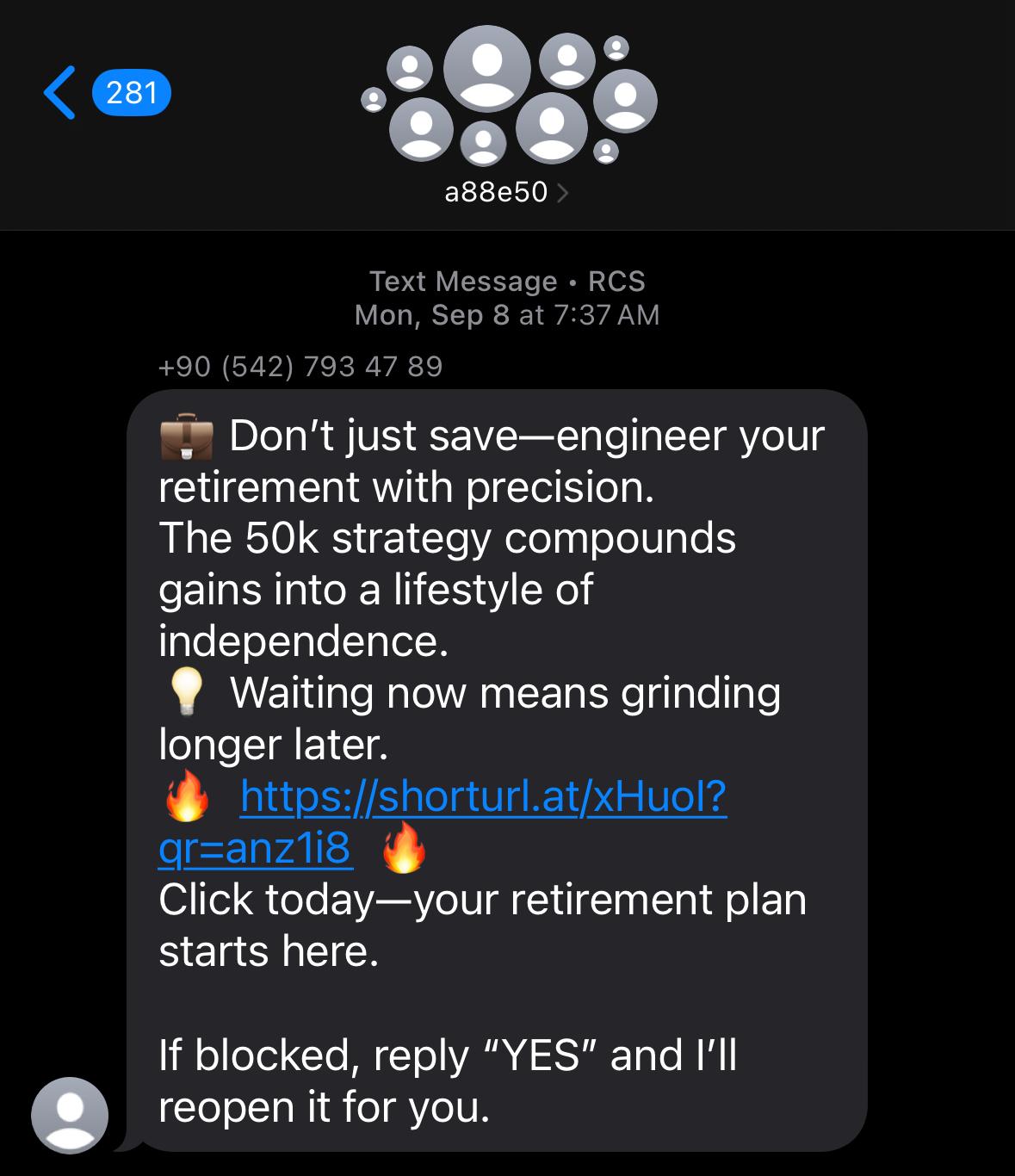
| Group Text Investment Pitch Scam Scammers send a flashy investment pitch to a big iMessage or SMS group with people you don’t know. The message promises fast “retirement” gains, includes a short web link, and sometimes says to reply “YES” so they can “reopen” the link. The goal is to get you to click, talk to them privately, and eventually send money to a fake “investment” or trading account (often tied to crypto or forex). Once you deposit, your money becomes very hard to get back.
| investment-crypto | SMS (iMessage Group) | High | No | 2025-09-23 | 0 |
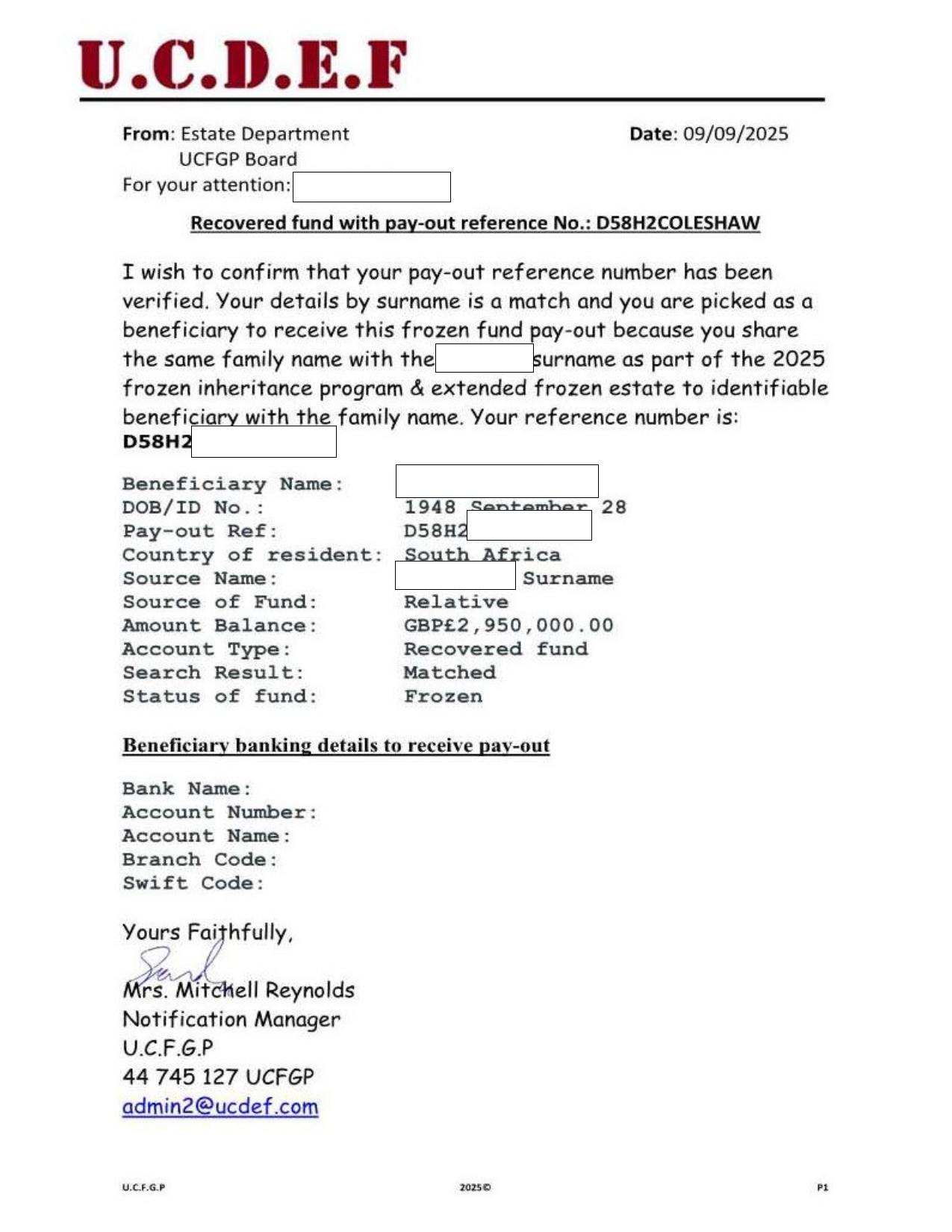
| Inheritance, Compensation, and Prize Payout Scam Emails Unsolicited emails or letters claim you are due a large inheritance, compensation payment, recovered funds, or prize. The message may impersonate a bank or an official-sounding organization, use a reference number to appear real, and ask for your bank account details to “process the payout.” After you reply, scammers often ask for upfront fees (tax, transfer, or clearance charges) or try to use your information for fraud.
| advance-fee | Email | High | No | 2025-10-10 | 0 |
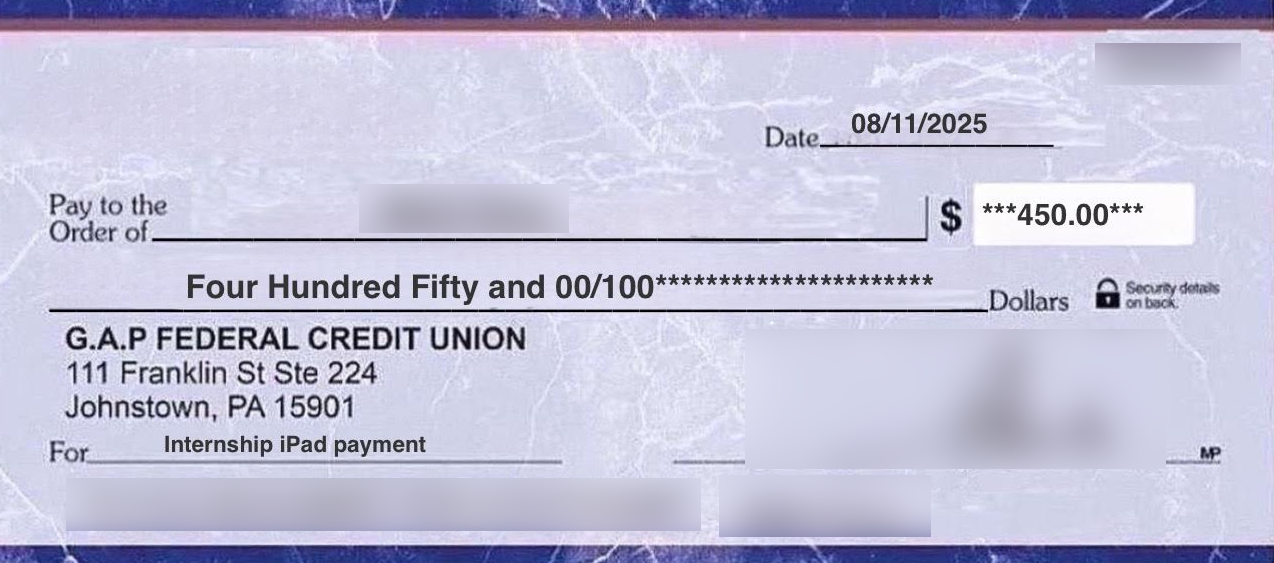
| Internship Supplies Check Scam A fraudulent internship scheme where scammers impersonate legitimate organizations or students, sending altered checks and demanding money back. Victims are tricked into revealing banking information and lose funds once the fake checks bounce.
| job-scam | Email | High | No | 2025-09-10 | 0 |
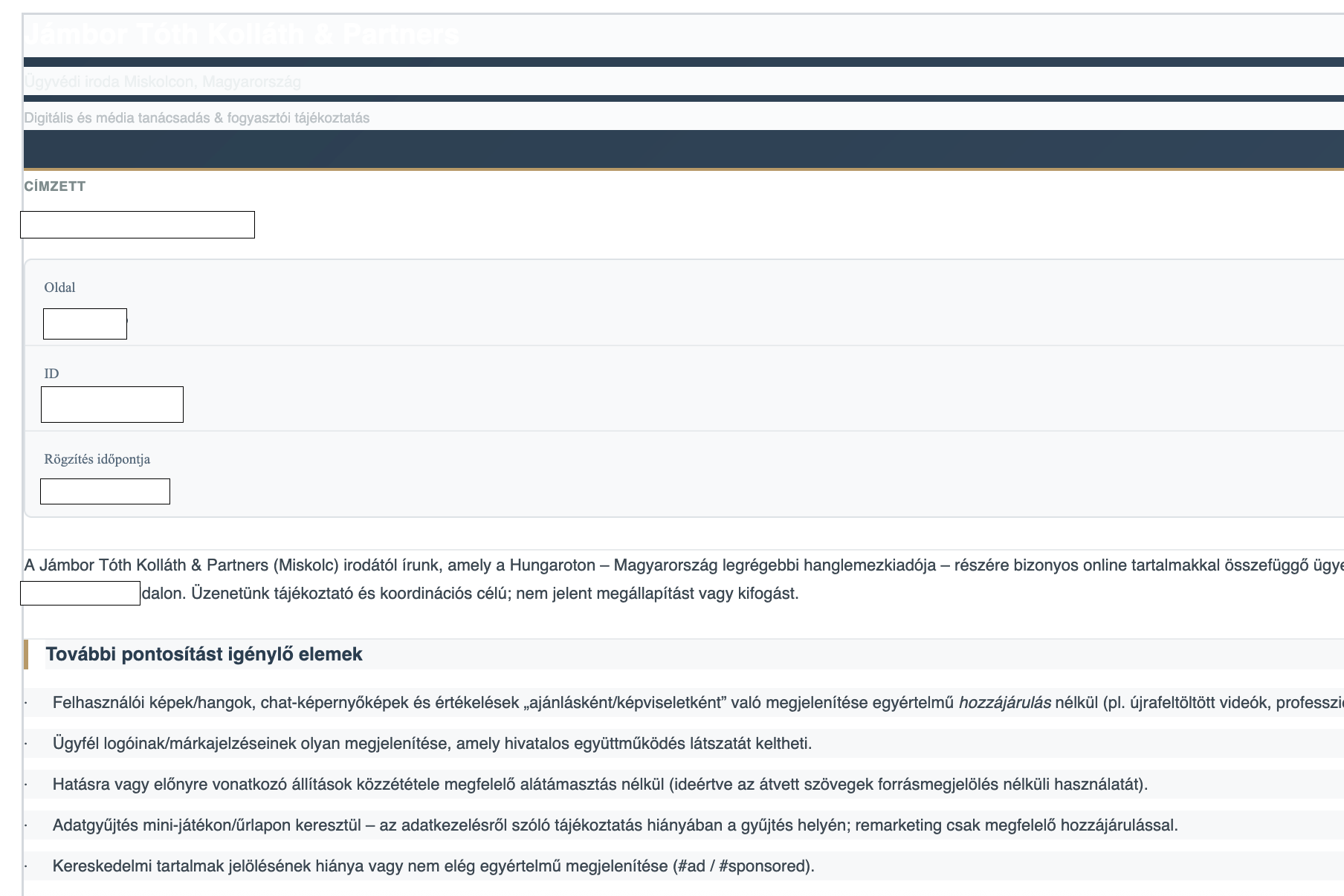
| Law Firm / Legal Notice Impersonation Scam Scammers pretend to be a law firm or legal team representing a known company. They email small businesses saying there are “issues” with the website (logos, reviews, privacy notice, or ads). The message sounds friendly and “cooperative,” and often includes a Word document (.docx) with “details” they want you to review. The aim is to make you open the attachment or contact them so they can push you to share information, install software, or pay a “resolution” fee.
| phishing | Email | High | No | 2025-10-17 | 0 |
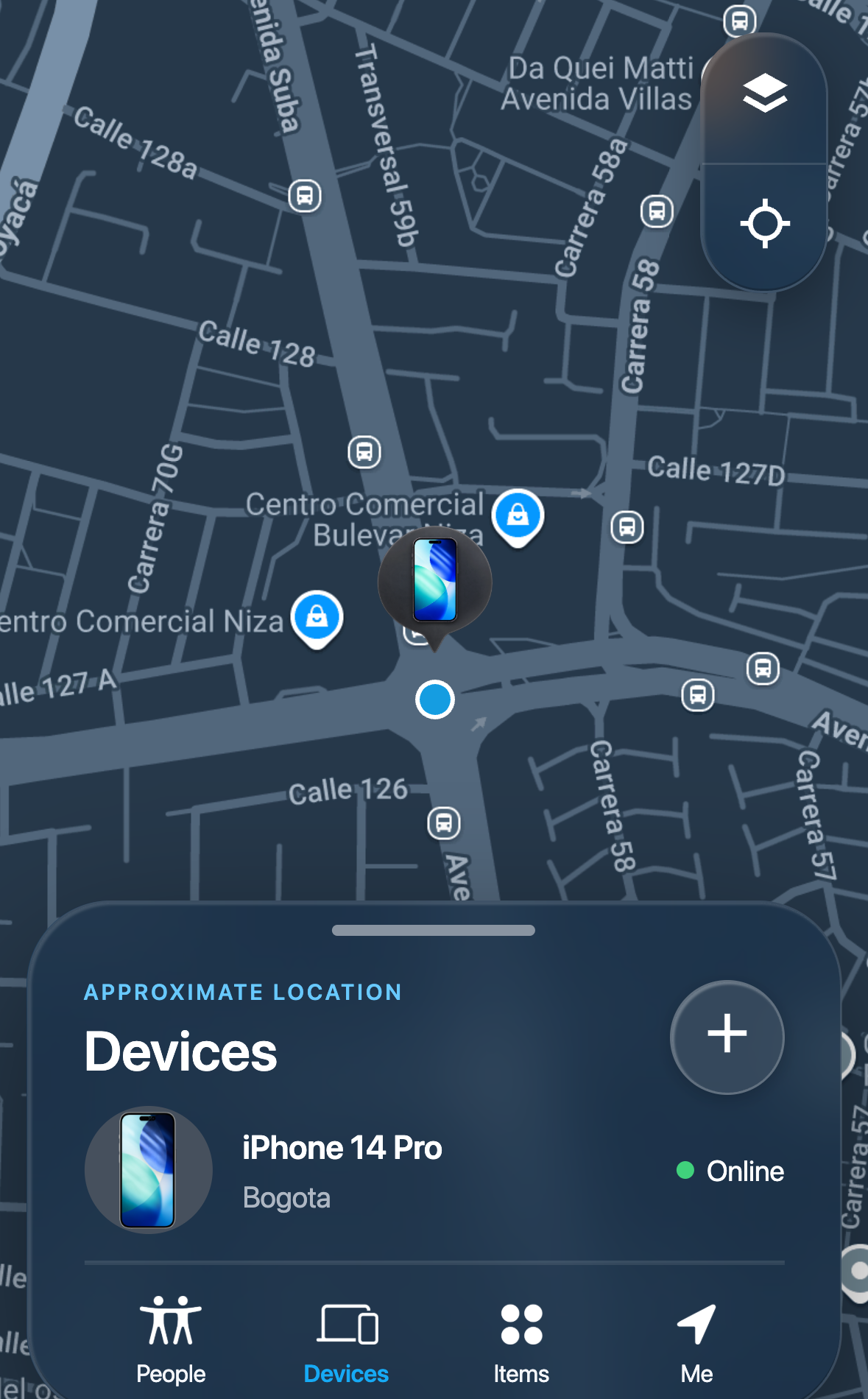
| Lost Device Location Passcode Scam A message tells someone whose phone is lost or stolen that the device has been found, and links to a page that imitates a phone-finding service. The page shows an animated map and a device marked online, then asks for the phone's own unlock passcode, described as a "security code," before it asks for anything else. Some versions then also ask for the account email address and password. The location and device shown on the page are written into the page in advance and are the same for every visitor; the page does not know where any phone is. A phone's unlock passcode can be used on the device itself to change the linked account password and switch off phone-finding features, so losing it can cost the owner both the device and the account.
| credential-harvest | Unknown | High | No | 2026-09-16 | 0 |
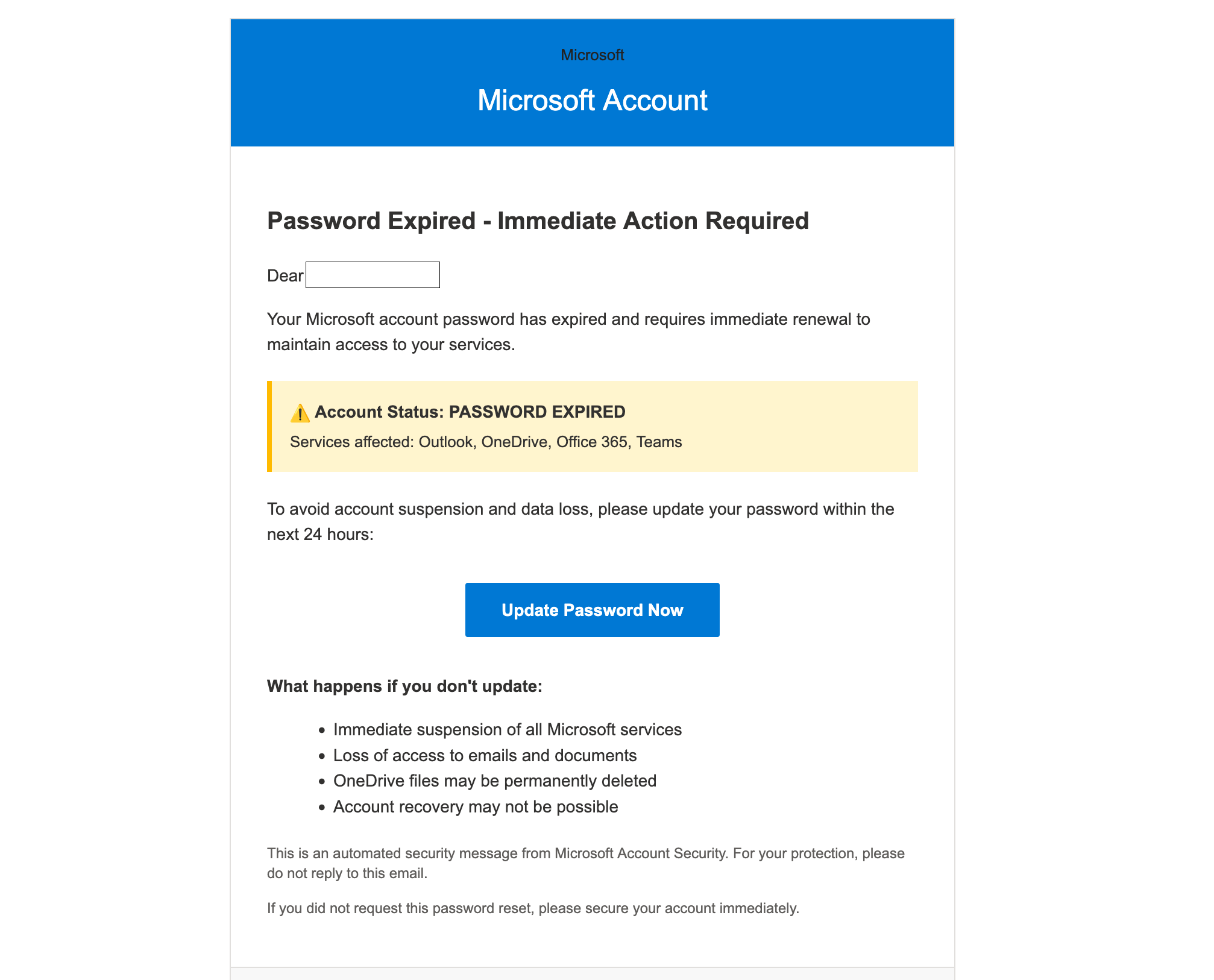
| Microsoft Account Password Expired Scam You get an email that looks like it’s from Microsoft saying your password has expired and you must “Update Password Now” within 24 hours. It warns you could lose access to Outlook, OneDrive, Office 365, or Teams. The button leads to a fake sign-in page that steals your email and password. The message uses urgent, scary language to make you act fast.
| credential-harvest | Email | High | No | 2025-10-08 | 0 |
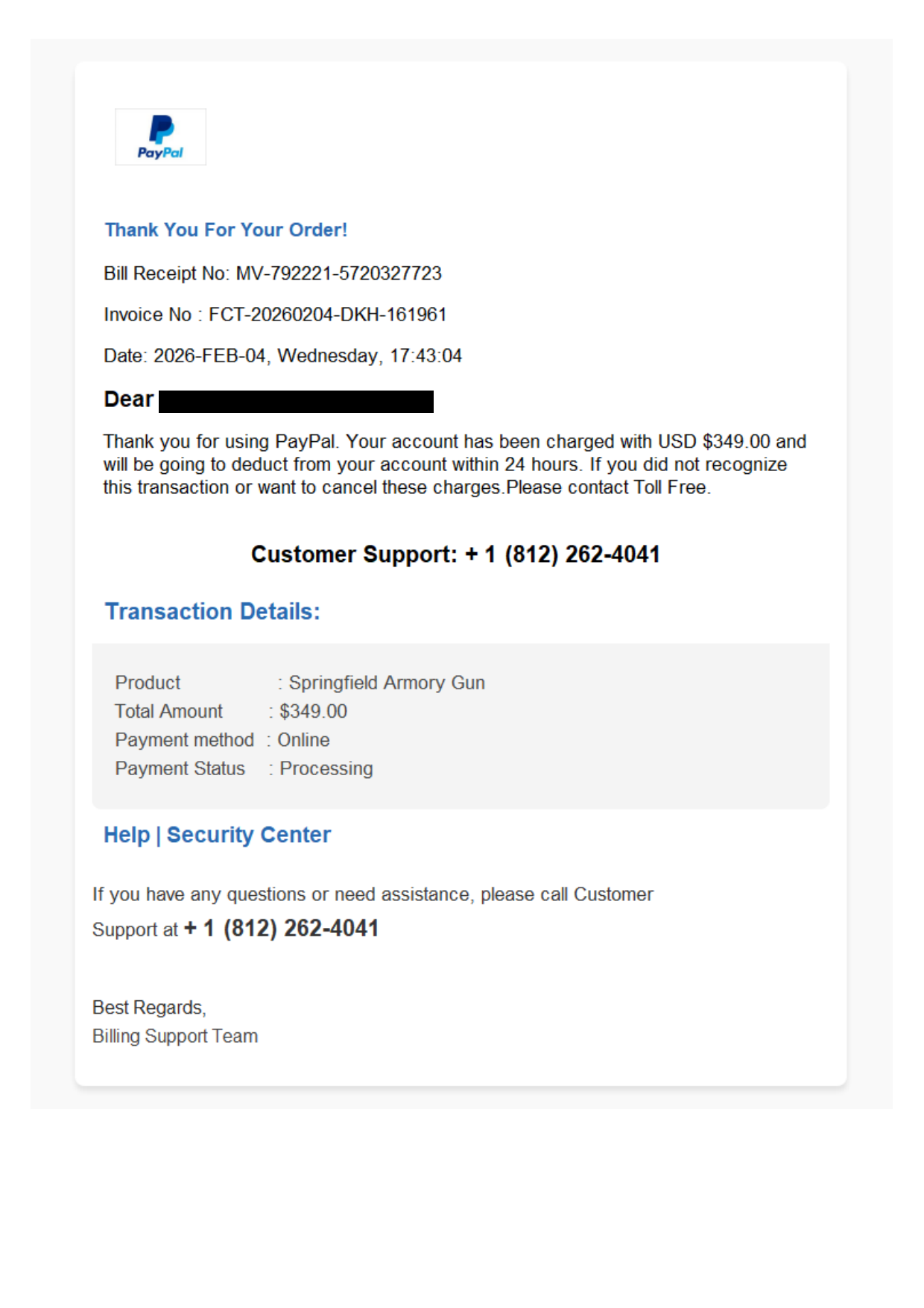
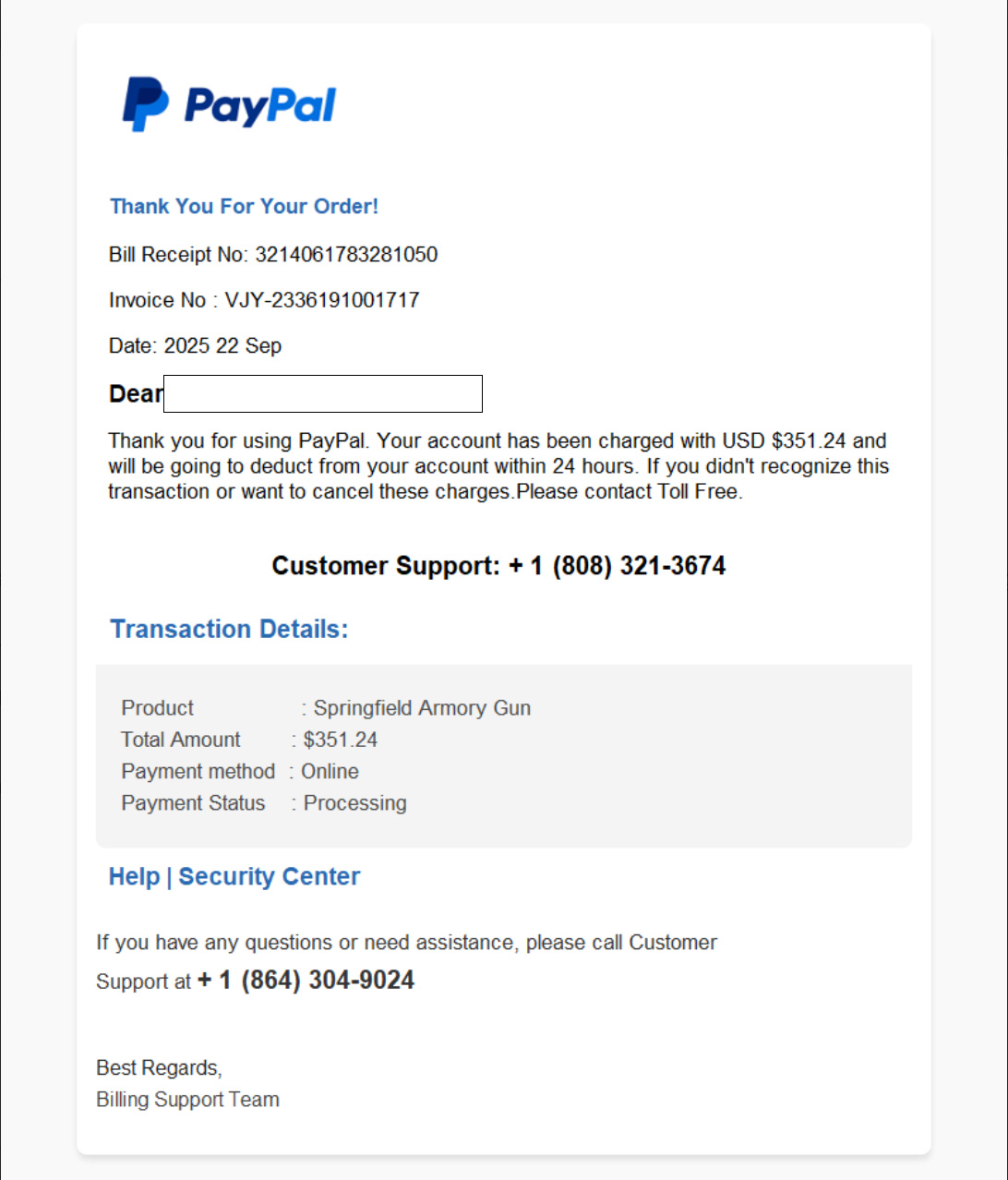
| Multi-Brand Impersonation Invoice Scam This scam involves an email impersonating multiple brands, including PayPal and Amber Cove Tire & Wheel Partners, to deceive recipients into believing they have made a purchase. The email includes a fake invoice and urges the recipient to call a specific number if they do not recognize the transaction.
| Email Scam | email | Low | No | 2026-02-04 | 0 |
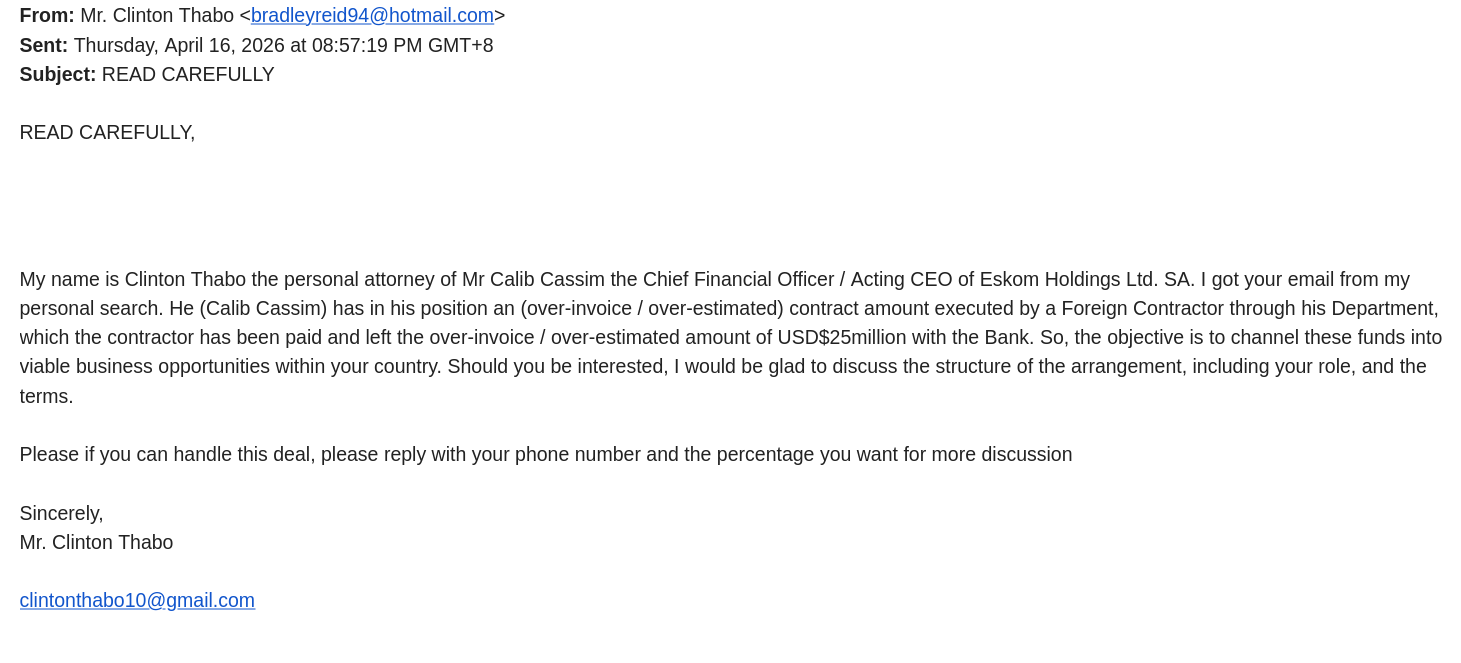
| Over-Invoiced Contract Funds Transfer Scam You receive an unsolicited message claiming that a large amount of money is sitting in a bank because of an over-invoiced or over-estimated contract. The sender says they are an attorney, banker, or company insider who needs your help to move the funds and promises you a share. If you respond, the story usually escalates into requests for fees, identity documents, bank details, or your help receiving and forwarding money.
| advance-fee | Email | High | No | 2026-04-16 | 0 |
| PayPal Invoice Refund Scam Scammers send a fake PayPal invoice and push you to call a support number. From there, they escalate to remote control, fake refunds, and pressure to "return" money you never received.
| refund-invoice | Email, email, Email (Gmail, PDF attachment) | High | No | 2026-02-04 | 0 |
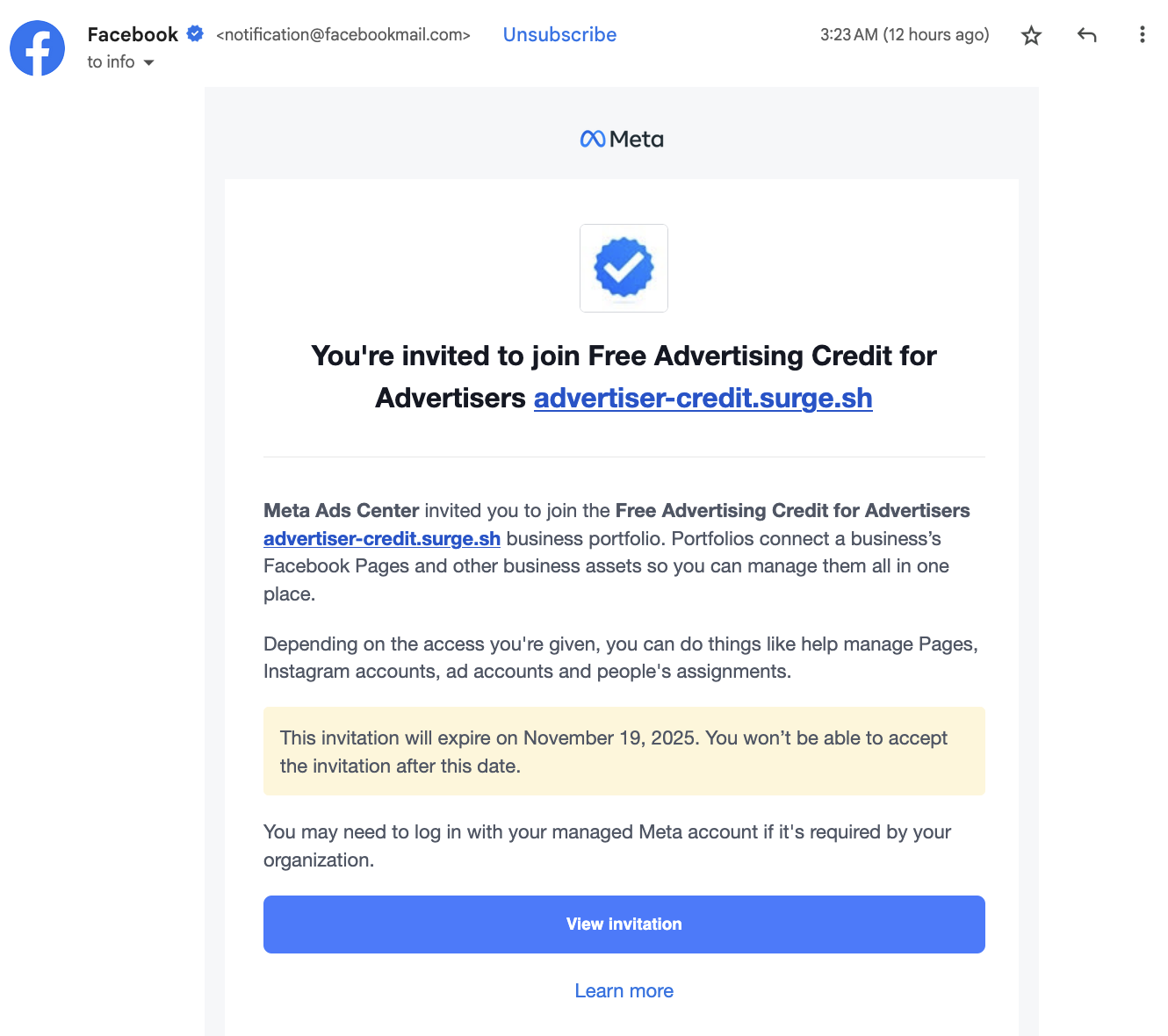
| Phishing Attacks Using Real Company Notifications Scammers are finding ways to use real notification emails sent by legitimate companies (like Facebook, Google, or Microsoft) to hide their phishing attacks. By registering fake accounts, business pages, or events on these platforms, they can include their scam website links in places like group names or business portfolio names. The real company then sends out official-looking emails—including the scam link—directly to users. Because these emails come from trusted sources, it’s easy to fall for the scam and click on the malicious link, which usually leads to a fake login page designed to steal your username and password.
| phishing | Email | High | No | 2025-10-21 | 0 |
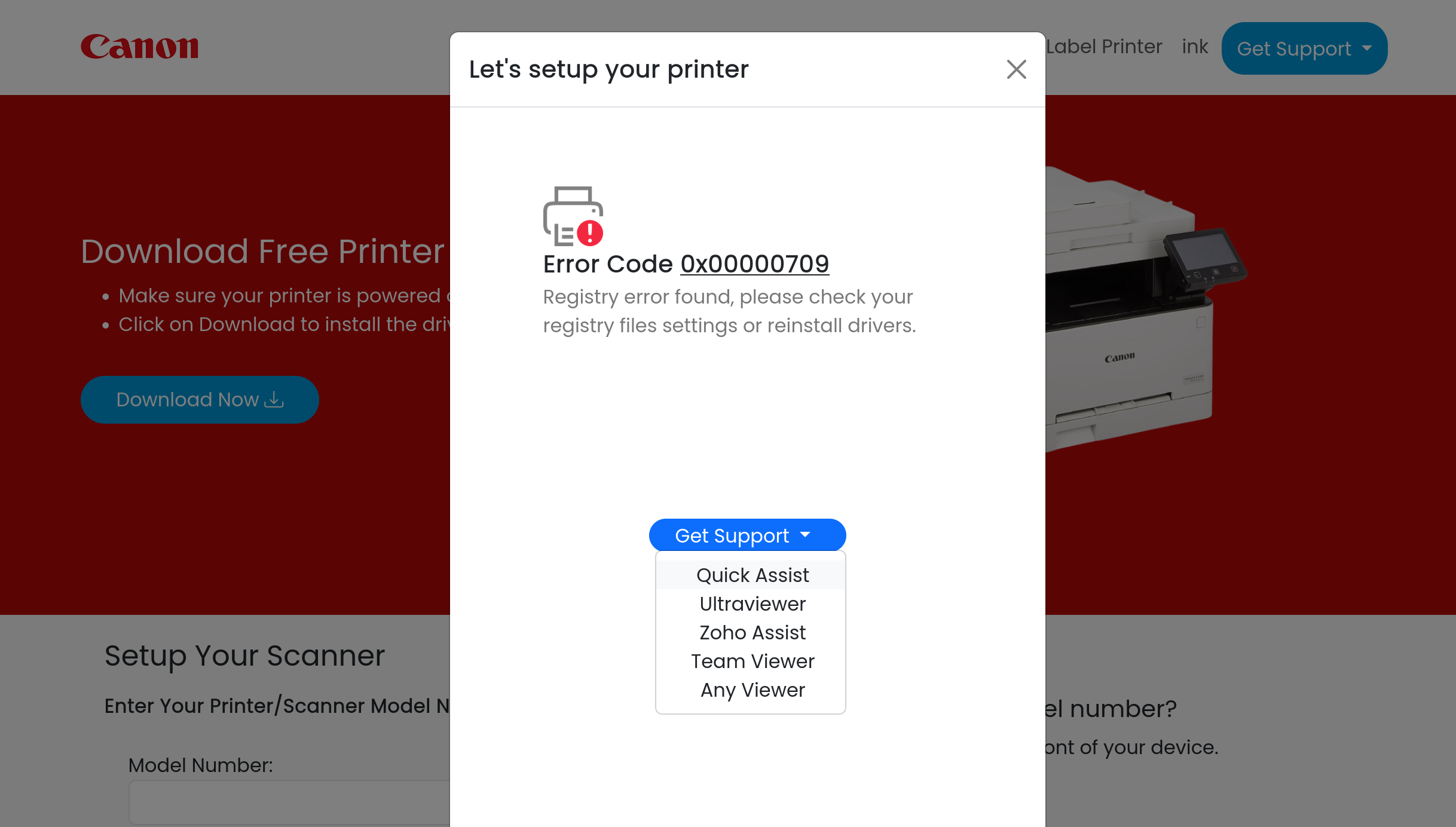
| Printer Remote Support Scam A website uses the names and logos of printer companies to make a printer problem look urgent. It tells visitors to download a printer driver or get support, then offers remote-access tools that could let an unfamiliar person control the computer.
| tech-support | Unknown | High | No | — | 0 |
| Pyramid Scheme Scam Pyramid schemes are scams that promise easy money if you pay to join and then recruit other people to join after you. Instead of selling real products or services, they rely on new members putting in money, which is then passed up to earlier participants. In most cases, only the people at the very top or those who recruited early make money. Almost everyone else loses what they paid and often feels pressure to involve friends and family.
| investment-crypto | Website, Social Media, Church Groups | High | No | 2025-11-11 | 0 |
| Remote Job Offer Text from Fake Recruiter Scammers send surprise texts pretending to be recruiters from well-known staffing firms or big stores. The message promises easy, part‑time remote work with very high daily pay and quick bonuses. Victims are pushed to reply by text, WhatsApp, or Telegram and are then coached into sharing personal details, paying “training/equipment” fees, or doing fake “tasks” that require deposits. No real job exists—the goal is to steal money or identity.
| job-scam | SMS / Text Message (Image Attachment), SMS (Text Message), iMessage, SMS (iMessage), SMS, Email, SMS / iMessage | High | No | 2026-05-02 | 0 |
| Retailer Order Release Fee Scam A website carrying the name and branding of a shop you have bought from claims to be holding your order. It asks for an identity number to look the order up, shows you an order or a store credit balance, and then asks for a small fee to release it: a delivery fee, a handling fee, insurance, or postage on a gift card. The fee is paid by instant bank transfer, which is hard to reverse. Nothing is released, because there is nothing behind the page.
| shipping | Unknown | High | No | 2026-09-17 | 0 |
| School Email Account Deactivation Scam Scammers send emails pretending to be from a college or university IT department, warning students that their email account will be deactivated unless they “verify” or “update” their information. These messages usually include an urgent tone and a link to a fake website that looks like a real college login page. The true goal is to steal your school email login and password, which can be used to access your personal data, financial accounts, or send more scam emails to others.
| credential-harvest | Email | High | No | 2024-06-06 | 0 |
| Share-to-Unlock Prize Scam A fake prize page uses a familiar brand name and promises a gift, but says you must share the page with several groups or friends before you can continue. The page may then send the people you contact to other unfamiliar domains. This pressure tactic is designed to spread the scam and can lead to requests for personal or payment information.
| lottery-prize | — | Medium | No | — | 0 |
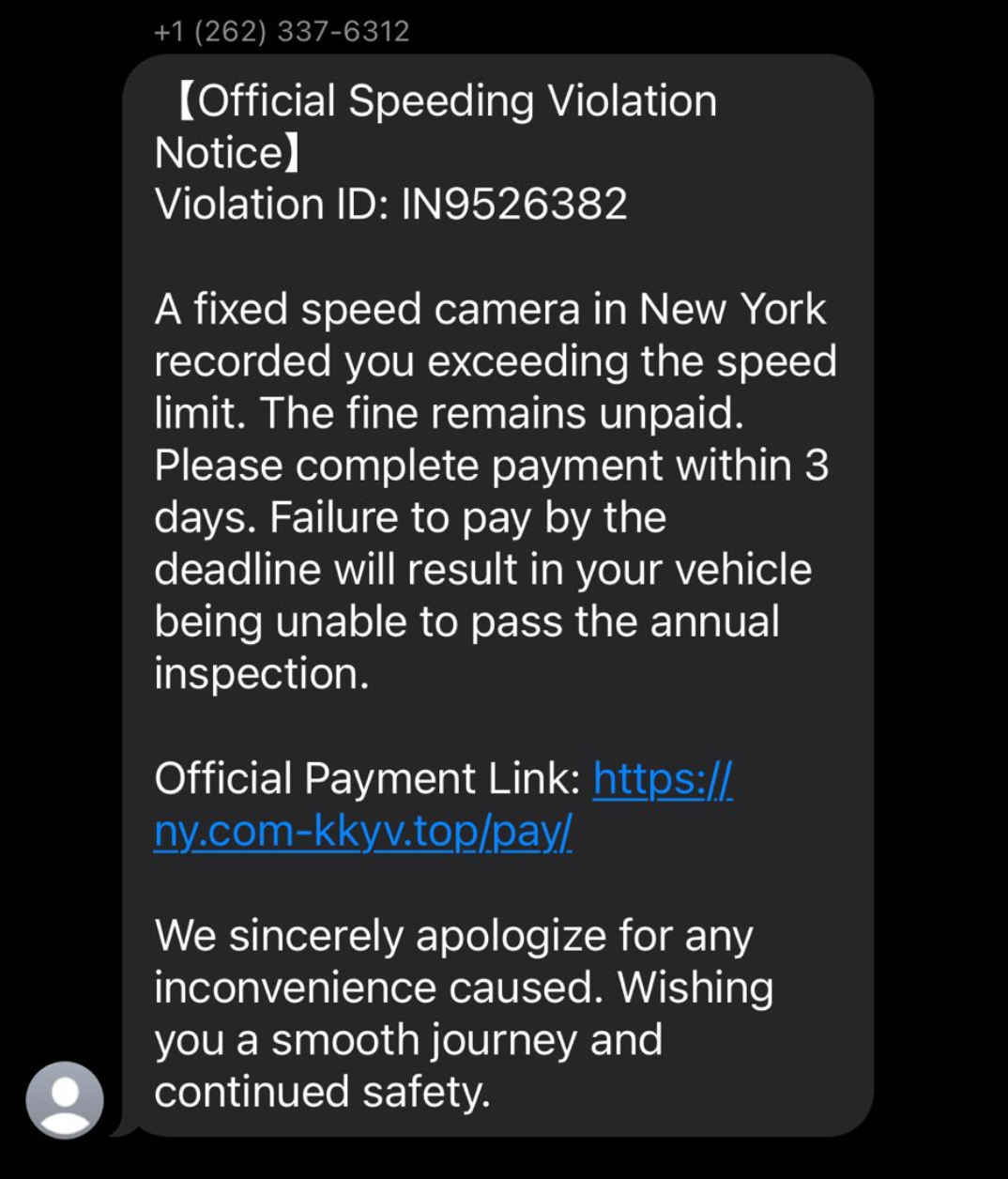
| Speeding Ticket Payment Text Scam Scammers send fake text messages claiming to be from your local or state traffic authority about an unpaid speeding ticket. The message usually references an official-sounding violation number and uses threats of further penalties—such as failing your vehicle inspection—to pressure you into paying right away. The payment link included in the message leads to a fake website built to steal your credit card or bank info.
| phishing | SMS (Text Message) | High | No | 2024-06-24 | 0 |
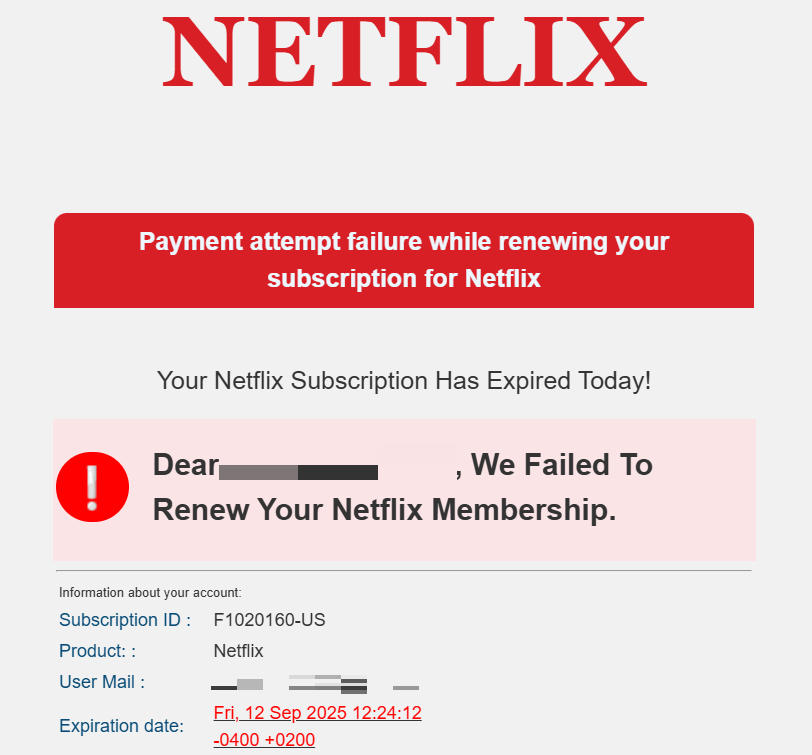
| Subscription Billing Update Phishing Scammers send emails or texts that look like they’re from a subscription or streaming service, saying your payment failed or your card expired. They warn your account will be paused soon unless you “update billing.” The link or button takes you to a fake website that copies the real brand’s look to steal your login, credit card, and personal details. Common examples include messages pretending to be from Netflix, Amazon Prime, Hulu, Disney+, Spotify, or Apple. Red flags include urgent deadlines (24–48 hours), generic greetings, small spelling mistakes, and links that don’t lead to the company’s official website.
| phishing | Email | High | No | 2025-09-22 | 0 |
| TestFlight Beta Invite Scam Scammers use Apple’s real TestFlight system to send official-looking beta invitations that mention trusted brands, like OpenAI or major banks. These invitations often promise rewards or early access but are a trick to collect your personal information or get you to trust a deceptive service. If you aren’t expecting a TestFlight invite, it’s safest to avoid it altogether.
| phishing | Email | High | No | 2026-03-21 | 0 |
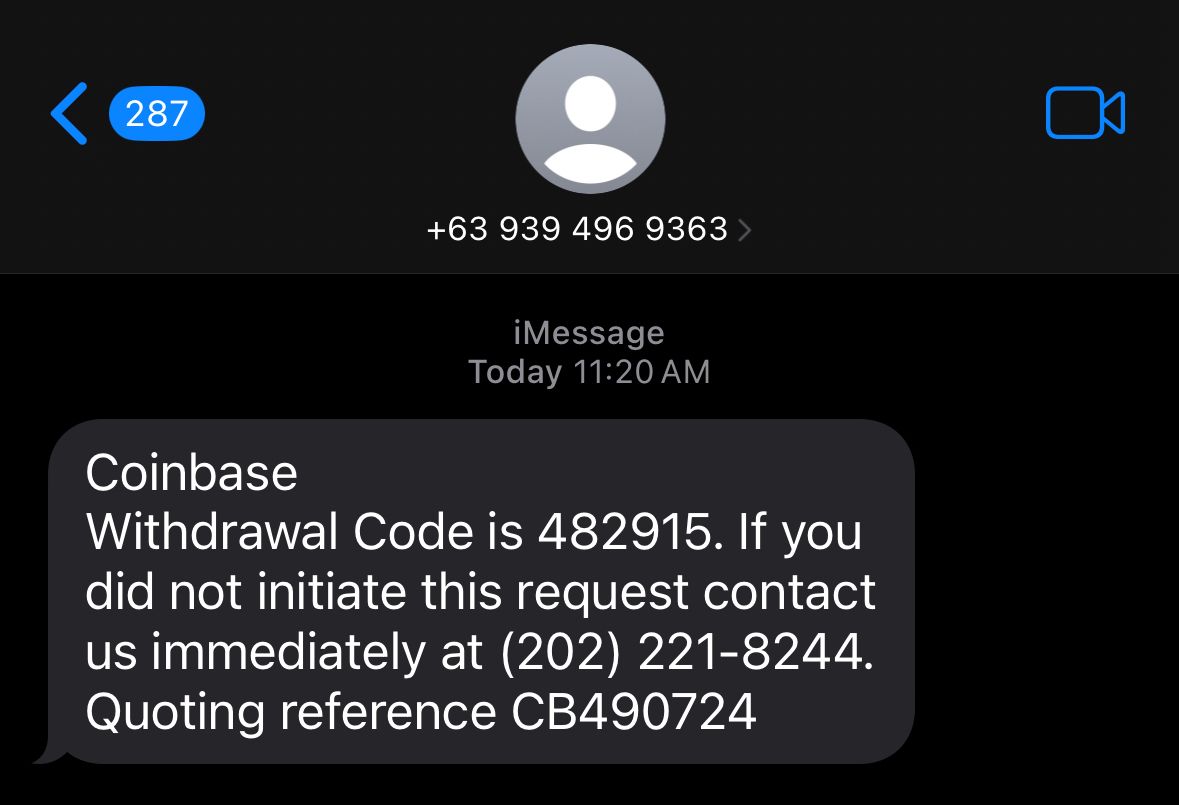
| Unauthorized Withdrawal Alert Scam Scammers pretend to be from your bank, payment app (Zelle, Cash App, PayPal), crypto exchange, or broker and claim a withdrawal or transfer is about to happen. The message pushes you to click a link or call a number “right now” to stop it. The goal is to get your password and one‑time codes, or to talk you into moving money to the scammer’s “safe” account.
| phishing | SMS (iMessage), SMS (RCS) | Medium | No | 2025-10-17 | 0 |
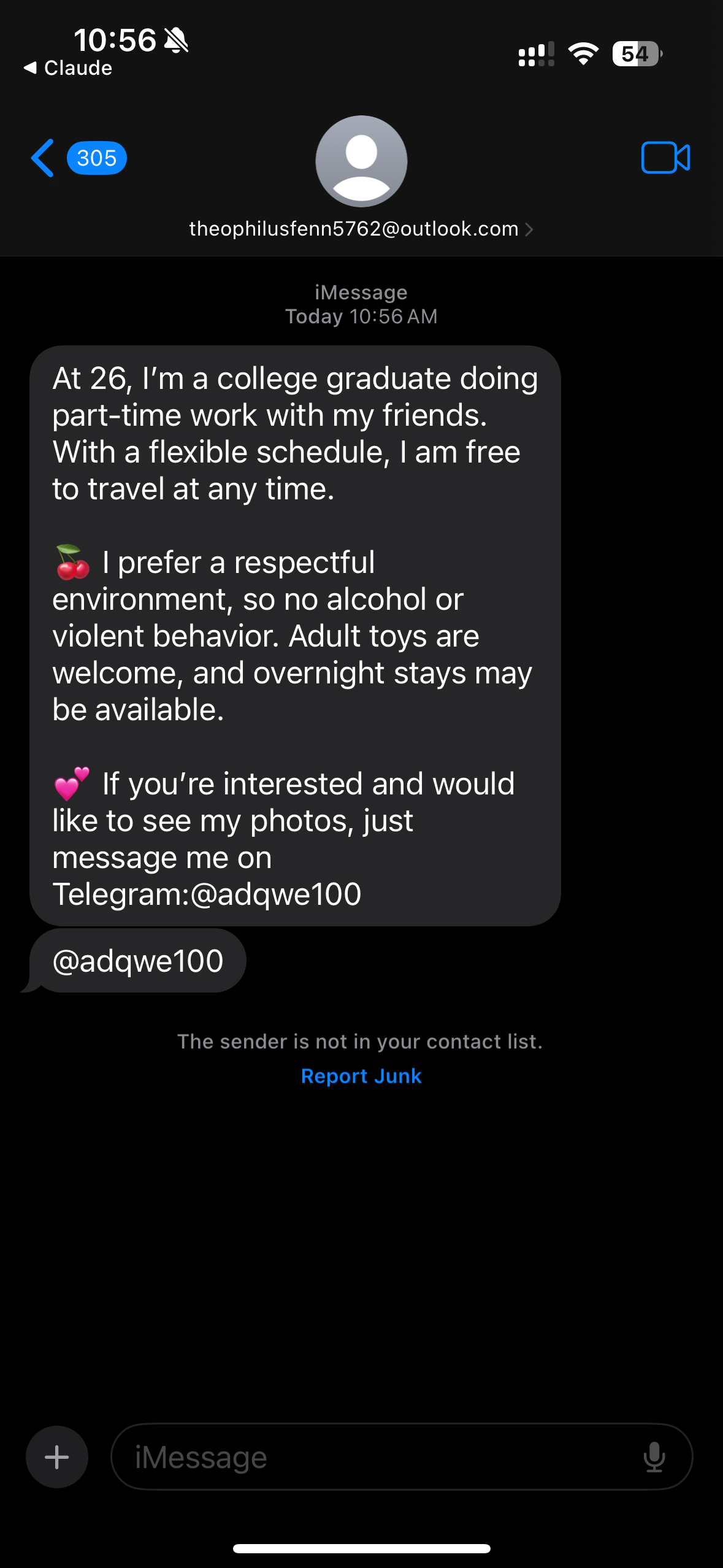
| Unsolicited 'Companion'/Escort Text That Pivots to Telegram A text or iMessage arrives out of nowhere from a stranger describing themselves in personal, flattering detail — often a young adult with a flexible schedule, willing to travel, and open to paid "companionship" or escort-style arrangements, sometimes with explicit conditions spelled out (no alcohol, adult toys welcome, overnight stays possible). The message ends by asking you to continue on Telegram "to see photos," and the Telegram handle is often repeated as its own separate follow-up message so it's easy to copy. These messages are mass-sent to random phone numbers and email-linked iMessage accounts. Moving to Telegram gets the scammer off a platform where the conversation can be reported or traced, and it commonly leads to requests for upfront "deposit," "verification," or "gas money" payments, pressure to send explicit photos, or a slow pivot into a bigger financial scam once trust is built.
| romance | iMessage | Medium | No | — | 0 |
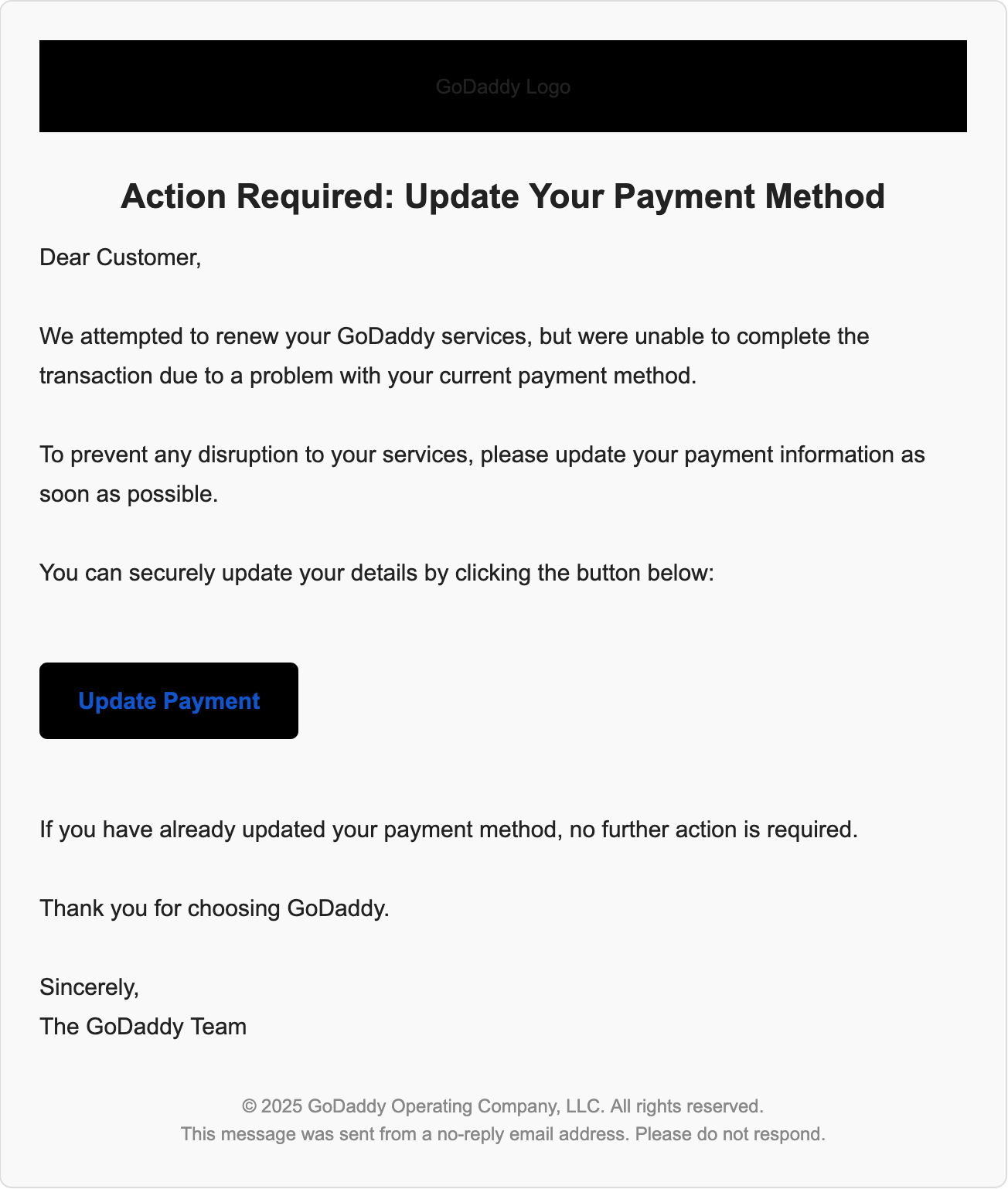
| Update Payment Details Scam Scammers send emails or texts pretending to be from companies you pay each month (like domain providers, streaming services, or utilities). The message claims your recent payment failed or your card expired and urges you to “update your payment details” to avoid service interruption. The link takes you to a fake sign‑in or billing page designed to steal your account password and credit card information.
| phishing | Email | High | No | 2025-10-14 | 0 |
| Venmo/Zelle Payment Hold Scam on Facebook Marketplace Scammers target people selling items on sites like Facebook Marketplace or Craigslist by pretending to be interested buyers. They claim they’ll pay you using Venmo or Zelle and may ask for your email or phone number. After you provide it, you receive a fake message (by text or email) saying your payment is “on hold” or can’t be released unless you receive additional funds or verify your account. The message may mention business accounts, new rules, or KYC requirements, and often lists a phone number to call “support.” The scammer’s goal is to either trick you into sending them money, sharing personal info, or contacting them directly.
| marketplace | SMS | High | No | 2026-03-03 | 0 |