This is a version of Delivery Reward Scam.
Buffalo Couriers delivery-fee page harvests card and identity details
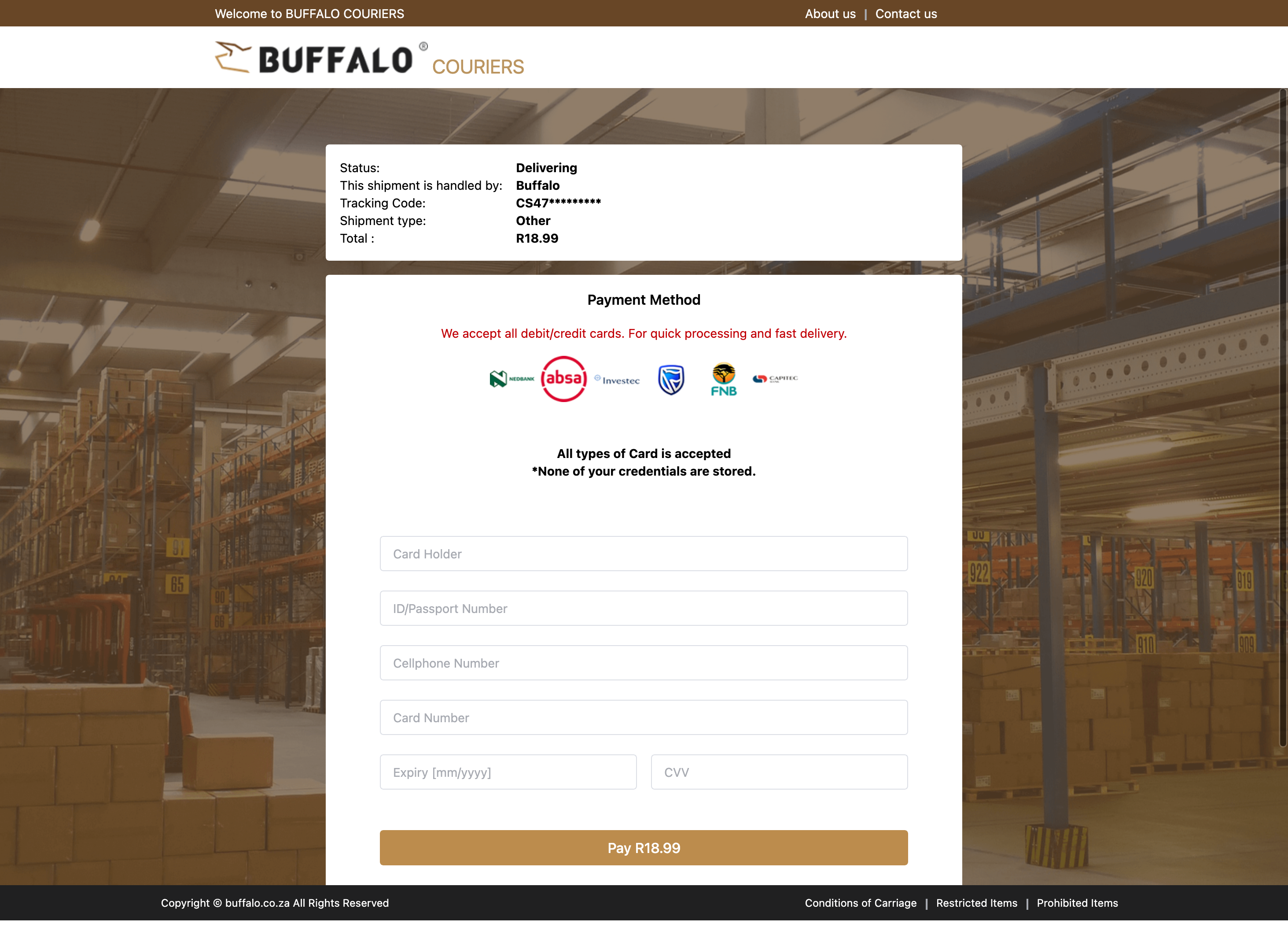
A page using Buffalo Couriers branding says a shipment is being delivered and asks the visitor to confirm an R18.99 shipping fee within 48 hours. The first page shows a fake shipment summary and sends the visitor to a second page that requests the cardholder's name, South African ID or passport number, cellphone number, card number, expiry date, and CVV. Both pages are hosted on an unrelated public file-hosting address rather than an official courier website. The second page's code sends the submitted details and the visitor's IP address to a Telegram bot controlled by an unknown recipient.
What’s different in this version
These traits set this message apart from the usual pattern.
-
Uses Buffalo Couriers branding, a fake tracking code, an Economy Service shipment summary, and a 48-hour deadline to make a small R18.99 fee seem believable.
-
The first page uses a checkbox and a CONFIRM AND PROCEED TO PAYMENT button to send the visitor to the card-collection page.
-
The second page requests a South African ID or passport number together with full payment-card details and CVV.
-
The page is hosted at f006.backblazeb2.com rather than an official Buffalo courier address.
-
The form checks that the card number is valid and that the expiry date is current, making the payment page look real.
-
The downloaded HTML sends the submitted identity, phone, card, CVV, and IP-address data to a Telegram bot before redirecting the visitor to a loading page.
How this scam works
- 1
Step 1: You get an email or text that looks like a delivery notice with a link to ‘track,’ ‘confirm,’ or ‘reschedule’ a package.
- 2
Step 2: The link opens a brand‑themed page offering a cash or gift reward if you take a short survey. A timer may count down to create urgency.
- 3
Step 3: After the survey, the site asks for your name, address, and a credit/debit card to pay a small fee or ‘verify identity.’
- 4
Step 4: Scammers may make unauthorized charges, enroll you in a subscription, or collect your personal details for future scams.
✓ Do this
- Go directly to the carrier’s website by typing it yourself (for example: ups.com, usps.com, fedex.com, dhl.com, royalmail.com) or use the official app.
- Use a tracking number you already have from a real order or the retailer’s order history.
- If you weren’t expecting a package, treat the message as suspicious until you confirm with the sender or retailer.
- Report suspicious delivery messages to the carrier’s fraud page and delete them.
✗ Avoid this
- Do not click links, scan QR codes, or call phone numbers in unexpected delivery messages.
- Do not enter card numbers or personal details to claim a ‘reward’ or pay a surprise ‘fee.’ Real carriers don’t offer cash prizes for deliveries.
- Do not trust countdown timers, emojis, or pushy language designed to make you act quickly.
- Do not assume a logo or colors mean the site is real—check the web address carefully.