Over-Invoiced Contract Funds Transfer Scam
You receive an unsolicited message claiming that a large amount of money is sitting in a bank because of an over-invoiced or over-estimated contract. The sender says they are an attorney, banker, or company insider who needs your help to move the funds and promises you a share. If you respond, the story usually escalates into requests for fees, identity documents, bank details, or your help receiving and forwarding money.
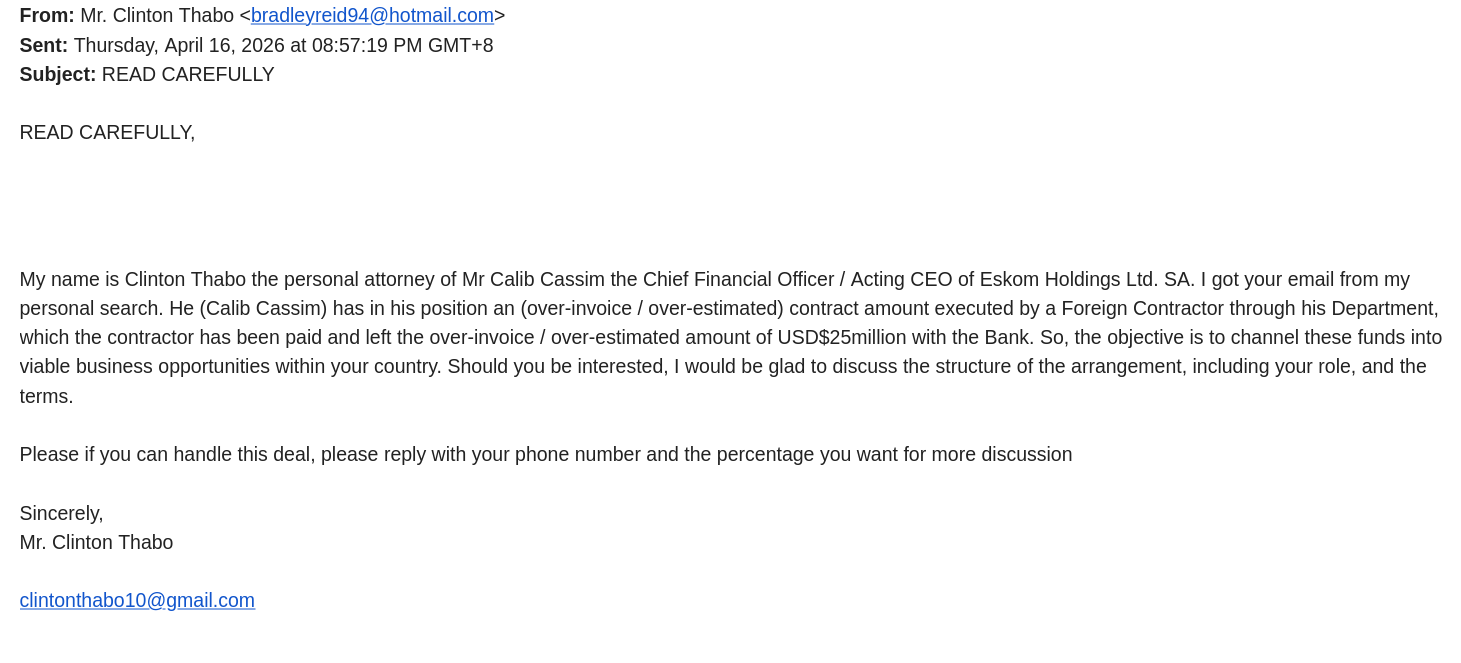
How this scam works
- 1
Step 1: You get an unexpected email, message, or call about hidden contract funds, surplus payments, or money left behind after a completed deal.
- 2
Step 2: The sender claims to be a lawyer, executive, accountant, or trusted insider and says they found you privately for a confidential opportunity.
- 3
Step 3: You are promised a percentage of a very large amount if you help receive, transfer, or invest the money.
- 4
Step 4: Once you engage, the scammer asks for personal details, bank information, copies of ID, or upfront fees for taxes, release charges, legal paperwork, or transfers.
- 5
Step 5: If you comply, you may lose money, expose your identity, or be drawn into moving stolen funds.
✓ Do this
- Be suspicious of any stranger offering you a share of hidden or unclaimed contract money.
- Verify company names and executive names using official websites you find yourself.
- Stop and talk to a trusted friend, family member, or bank before sending details or money.
- Keep copies of the message and report it to your email provider and local fraud authority.
✗ Avoid this
- Do not send bank details, passport copies, ID cards, or your home address to someone offering a secret payout.
- Do not pay taxes, transfer fees, legal fees, or release charges to unlock promised funds.
- Do not agree to receive or move money on someone else’s behalf.
- Do not trust claims that a confidential deal with millions of dollars can begin through a free email account.
Different versions of this scam
1 example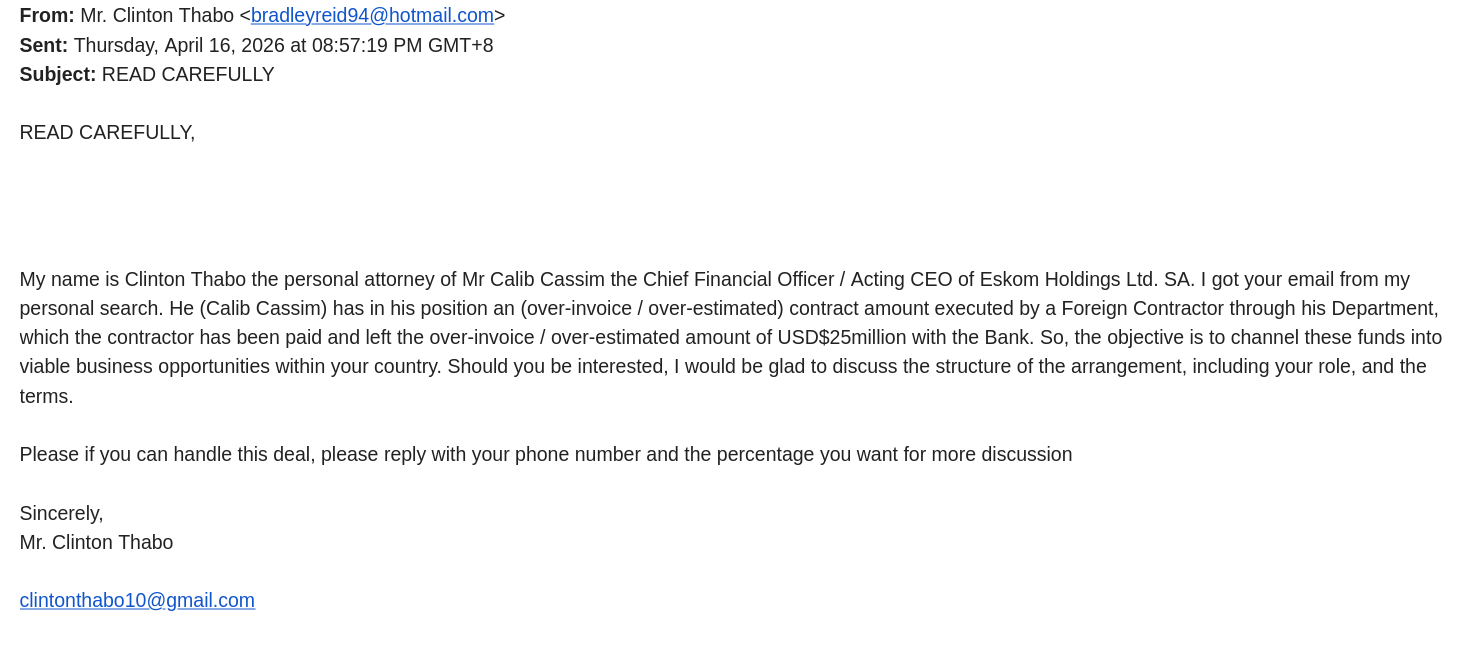
Need help with a similar message?
Do not reply, pay, or use contact details in an unexpected message. Verify through the official app or website, then report what you saw so the Archive can connect related patterns.
Quick tip: Verify independently
Don’t call numbers or click links in unexpected messages. Go directly to the company’s official site or app and contact support from there.