Fake Government Violation Notice Scam
Scammers send official-looking letters, emails, or texts claiming you owe money for a traffic ticket, overdue fine, or other government violation. These notices use threats like extra fees, court action, or license suspension to scare you into paying quickly—usually through a scam website or QR code. The goal is to steal your money and personal information by pretending to be a trusted government agency.
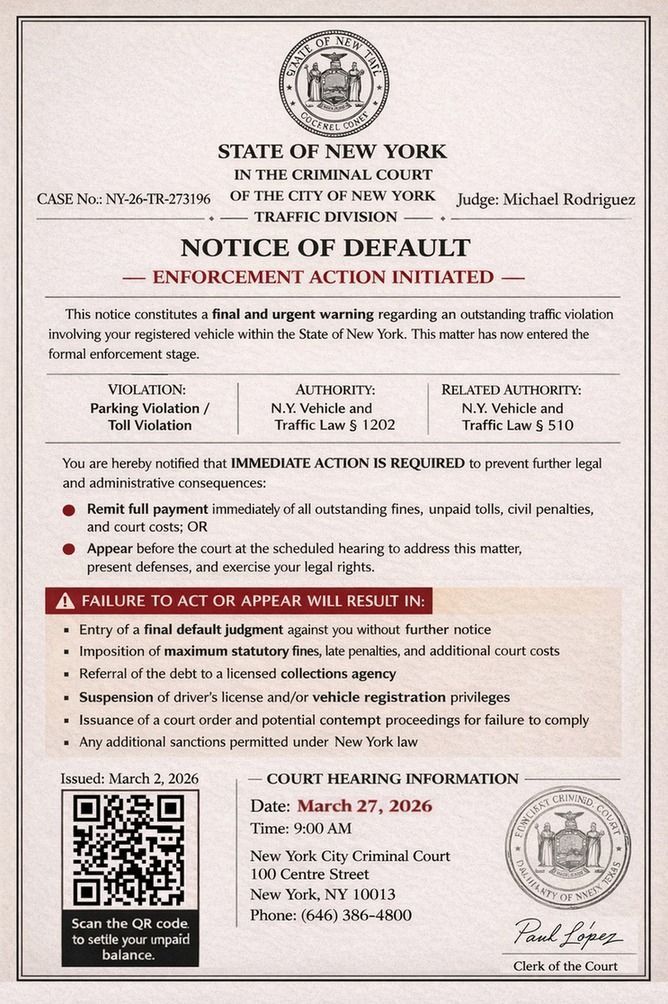
How this scam works
- 1
Step 1: You receive a letter, email, or text that looks like it’s from a government office or court. It says you have an overdue ticket or unpaid fine and demands immediate payment.
- 2
Step 2: The notice pressures you to pay using a provided QR code, website, or phone number. If you pay, your money and details go straight to the scammers—there is no real violation or case.
✓ Do this
- Always contact the government office or agency directly using a phone number or website you find on your own to confirm if a notice is real.
✗ Avoid this
- Never scan QR codes, click links, or call numbers in unexpected violation notices without verifying their authenticity.
Different versions of this scam
2 examples
Need help with a similar message?
Do not reply, pay, or use contact details in an unexpected message. Verify through the official app or website, then report what you saw so the Archive can connect related patterns.
Quick tip: Verify independently
Don’t call numbers or click links in unexpected messages. Go directly to the company’s official site or app and contact support from there.