Unsolicited 'Companion'/Escort Text That Pivots to Telegram
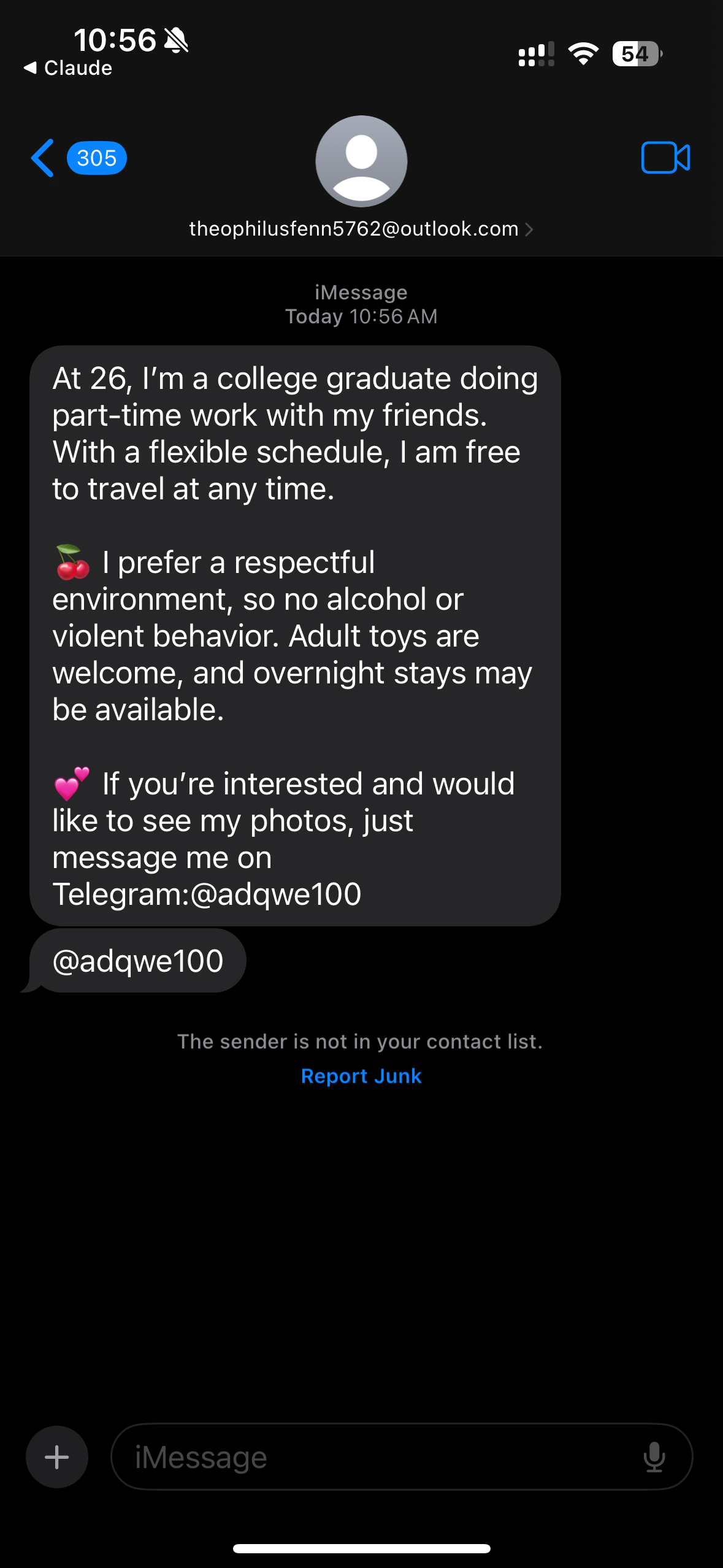
A text or iMessage arrives out of nowhere from a stranger describing themselves in personal, flattering detail — often a young adult with a flexible schedule, willing to travel, and open to paid "companionship" or escort-style arrangements, sometimes with explicit conditions spelled out (no alcohol, adult toys welcome, overnight stays possible). The message ends by asking you to continue on Telegram "to see photos," and the Telegram handle is often repeated as its own separate follow-up message so it's easy to copy. These messages are mass-sent to random phone numbers and email-linked iMessage accounts. Moving to Telegram gets the scammer off a platform where the conversation can be reported or traced, and it commonly leads to requests for upfront "deposit," "verification," or "gas money" payments, pressure to send explicit photos, or a slow pivot into a bigger financial scam once trust is built.
How this scam works
- 1
Step 1: You receive an unexpected text or iMessage from a number or email address you don't recognize, with no prior conversation.
- 2
Step 2: The message describes the sender in personal, inviting terms — age, being a "college graduate," a flexible or fully free schedule, and willingness to travel — designed to sound like a real, approachable person.
- 3
Step 3: It frames itself as a companionship or escort-style offer, sometimes listing explicit "house rules" (no alcohol/violence, adult toys welcome, overnight stays available) to seem like a genuine personal ad.
- 4
Step 4: It asks you to continue on Telegram "to see photos," and the Telegram handle often arrives as its own separate, standalone message right after the pitch (a "double text").
- 5
Step 5: On Telegram, the scammer may share stolen or AI-generated photos, ask for money upfront, pressure you to send your own explicit images, or gradually steer the conversation toward a bigger scam (fake payment, crypto "investment," or blackmail).
- 6
Step 6: Once you pay, send images, or share personal information, the person stops responding, keeps demanding more money, or uses what you sent to pressure you further.
✓ Do this
- Don't reply to unsolicited texts from unknown numbers or email addresses offering companionship, dating, or escort services — legitimate contacts don't cold-message strangers this way.
- If you already replied, stop the conversation and block the sender everywhere, including on Telegram.
- If you sent money, gift cards, cryptocurrency, or personal/explicit images, save the messages as evidence and report it (local police, the FTC at reportfraud.ftc.gov, and the platform the contact happened on).
✗ Avoid this
- Don't move the conversation to Telegram or any other app the sender picks — it's a way to get out of reach of moderation and reporting tools.
- Don't send money, gift cards, or cryptocurrency to someone you have never met in person.
- Don't send explicit photos or personal identifying information (address, ID, financial details) to a stranger who messaged you first.
- Don't assume a warm, casual, or specific-sounding message means it's a real person reaching out personally — these scripts are mass-sent to many numbers at once.
Different versions of this scam
1 example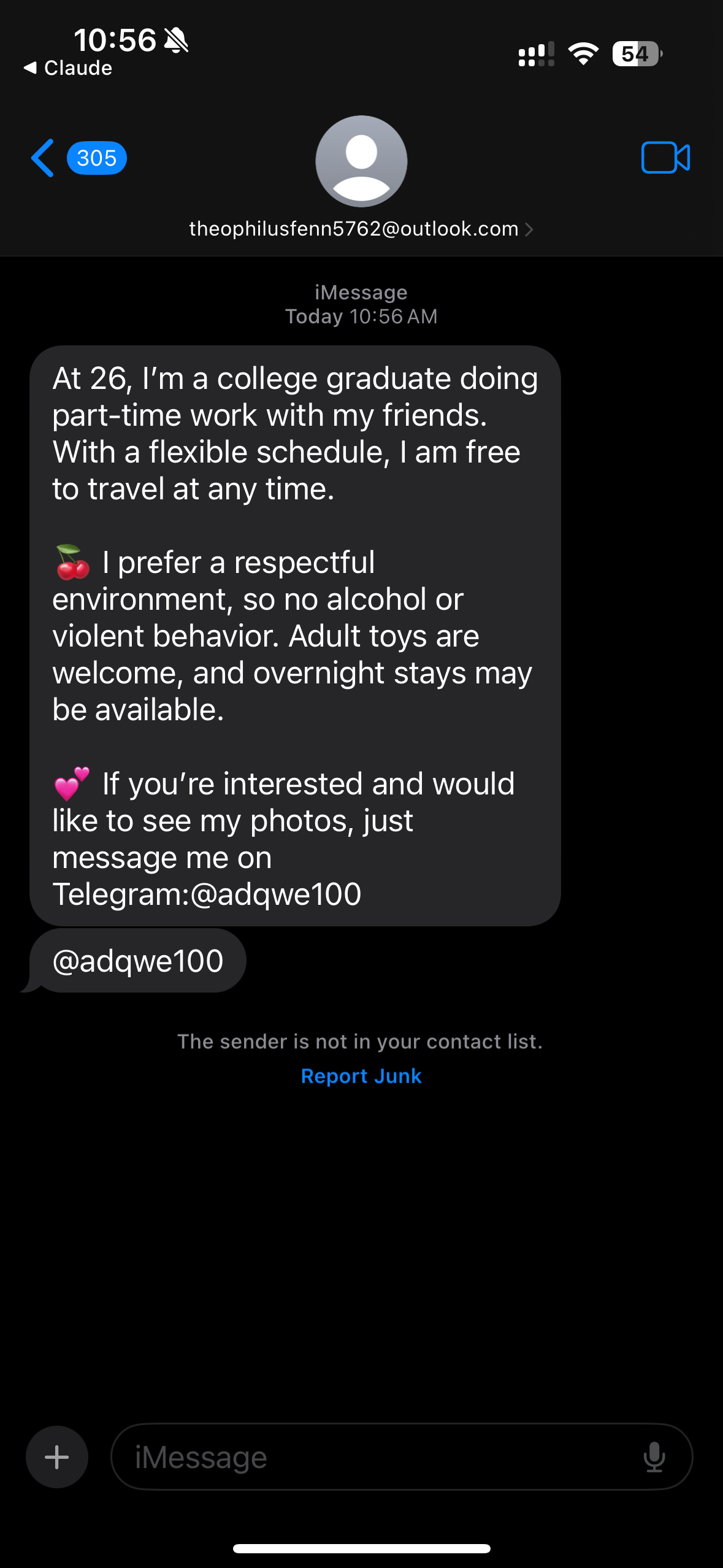
Need help with a similar message?
Do not reply, pay, or use contact details in an unexpected message. Verify through the official app or website, then report what you saw so the Archive can connect related patterns.
Quick tip: Verify independently
Don’t call numbers or click links in unexpected messages. Go directly to the company’s official site or app and contact support from there.